
Florida Drivers
Mexican Auto Insurance for Florida Drivers
A practical guide for Florida drivers crossing into Mexico — Texas border crossings used after the cross-country drive, coverage requirements, common destinations, and what's specific about driving from Florida into Mexico.
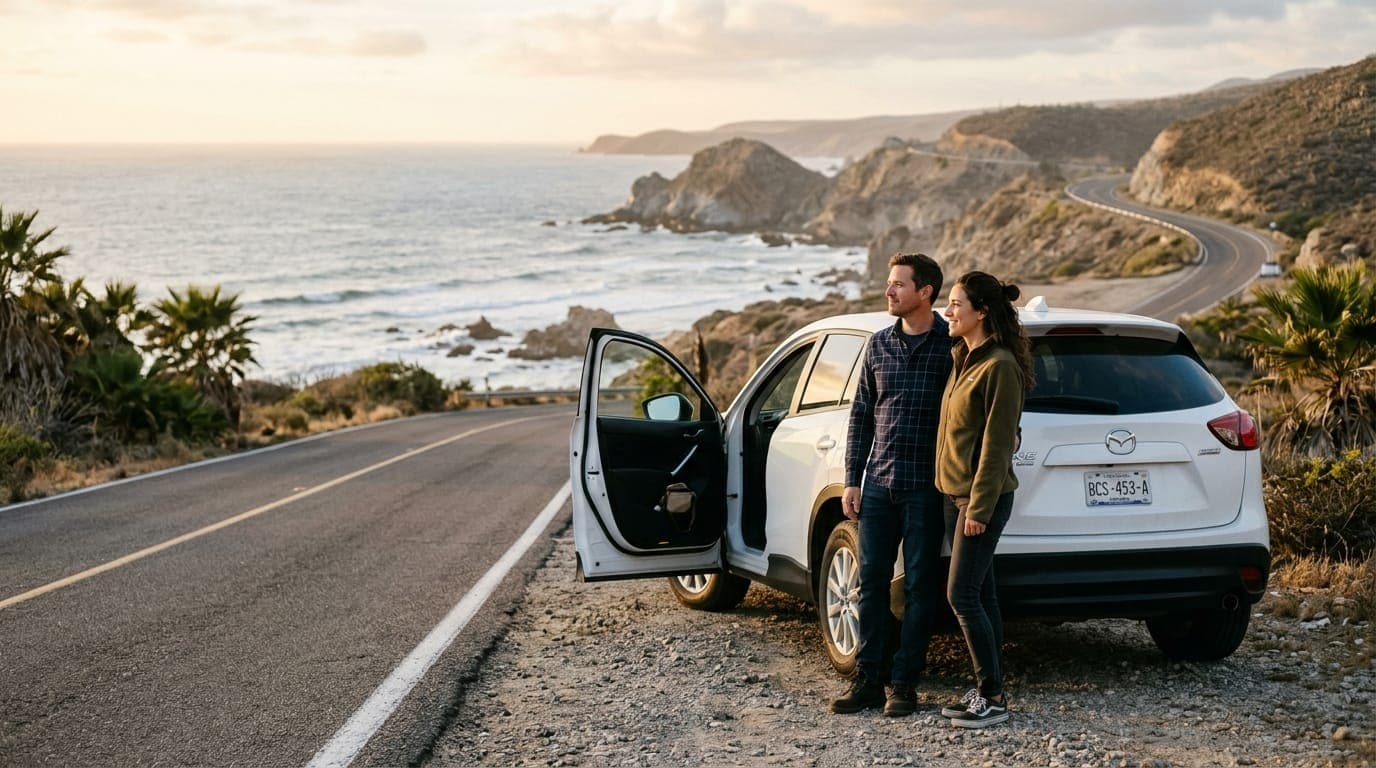
Most Florida residents who travel to Mexico fly. Cancún, Cabo, and Mexico City are quick direct flights from Miami, Orlando, or Tampa. But a meaningful subset of Floridians do drive — and when they do, the trip looks different from any other state's pattern. There's no Florida-Mexico land border; Florida drivers heading to Mexico cross through Texas, primarily Laredo, Brownsville, or McAllen, after a 1,200–1,500-mile cross-country drive. The audience this guide is for: Florida-based RV travelers, long-haul snowbirds doing the cross-country migration to Mexico's interior, retirees driving to or from owned property in places like San Miguel de Allende, and the smaller group driving cars cross-country to long-stay destinations.
This guide covers what Florida drivers specifically need to know — the Texas crossings most relevant to your route, what changes on a long-haul cross-country drive, and the regional considerations that come with Florida's flying-default culture meeting Mexico's road-trip realities.
Why your Florida auto policy doesn’t cover Mexico
Florida auto insurance is regulated by the Florida Office of Insurance Regulation under Florida statutes that don’t extend across the U.S.-Mexico border. The major Florida carriers — State Farm, Allstate, Geico, Progressive, USAA, GEICO, Farmers, Citizens — all exclude Mexico coverage from standard policies. Some offer “Mexico coverage” endorsements, but those typically cover physical damage to your own vehicle in a narrow border-zone strip and exclude the third-party liability that Mexican law actually requires.
The legal-financial-responsibility framework in Mexico requires policies issued by carriers licensed under CNSF (Comisión Nacional de Seguros y Fianzas), the Mexican federal insurance regulator. Florida carriers aren’t CNSF-licensed, so their policies aren’t recognized for Mexican legal purposes — even if they have a “Mexico coverage” rider that might pay out for damage to your own car in the border zone.
The practical answer for Florida drivers is the same as for any U.S. driver: buy a separate Mexican-licensed policy before you cross. Most Florida drivers buy through online comparison platforms and have coverage in hand before they leave Florida — well before reaching the Texas border.
The Florida-to-Mexico route — what to plan for
The cross-country drive from Florida to the Texas-Mexico border is meaningful in a way that doesn’t apply to drivers from California, Texas, or Arizona. The shortest route from Miami or Orlando to Laredo is roughly 1,400 miles via I-10 and I-35, taking 22–24 hours of driving. From Tampa, it’s 1,250 miles. From Jacksonville, 1,300 miles. Most Florida drivers split this into a 2–3 day drive each direction.
This matters for insurance planning in two ways. First, the policy effective dates need to account for travel time both directions — you don’t buy a 14-day policy and start the clock when you leave Florida. Buy effective from when you actually cross the Mexican border. Second, the cross-country drive means your U.S. auto policy is doing the work for the bulk of the trip, and Mexican coverage only kicks in at the border. That’s normal and how all U.S.-side affiliate policies are structured.
Most Florida drivers heading to Mexico use Laredo as the primary crossing — it has the most direct connection to Monterrey via the Mex-85 toll road and is the standard route for both interior Mexico destinations and onward connections to Mazatlán via Saltillo and Mex-40.
Texas border crossings used by Florida drivers
Florida drivers heading into Mexico have effectively the same crossing options as Texas drivers, because the routing forces them through Texas. Five matter:
Laredo / Nuevo Laredo is the standard choice. Direct connection south via the Mex-85 toll road to Monterrey (about 2.5 hours from the border) and onward to interior Mexico. Multiple bridges separate passenger and commercial traffic. This is the route most Florida snowbird traffic uses.
McAllen / Hidalgo / Reynosa serves the Rio Grande Valley and is the standard option for travelers heading to the Mexican Gulf Coast, Tampico, or south through eastern Mexico. Less commercial congestion than Laredo. Florida drivers heading to Veracruz or Yucatán-direction overland trips use this corridor.
Brownsville / Matamoros is the southernmost Texas crossing. Used for travelers continuing to the Tamaulipas Gulf Coast or traveling deeper south through eastern Mexico. From Florida via I-10 then south, Brownsville adds drive time vs. Laredo but can be the right choice for specific destinations.
Eagle Pass / Piedras Negras is between Laredo and Del Rio, used as an alternative for Monterrey-direction trips when Laredo is congested.
El Paso / Ciudad Juárez is the western-most Texas crossing. Florida drivers heading to Chihuahua, Casas Grandes, or Copper Canyon would use El Paso, though the route from Florida adds roughly 200 miles vs. Laredo for those destinations.
All Texas crossings recognize standard Mexican auto policies issued by the major U.S.-side affiliates. The crossing you use doesn’t change which policy you need — only your trip timing and routing.
Coverage requirements for Florida drivers
The legal floor in Mexico is third-party liability from a CNSF-licensed Mexican carrier. The practical question for Florida drivers is whether you’re staying in the Free Zone (rare for FL drivers, since most FL trips into Mexico are interior-bound) or going past it (common):
For short border-zone trips (Nuevo Laredo or Reynosa within the 16-mile Free Zone — uncommon for FL drivers): liability or standard coverage, no TIP.
For interior Mexico trips — which is the standard FL pattern (Monterrey, Saltillo, San Miguel de Allende, Mexico City, Mazatlán, Veracruz, anywhere meaningful): standard or premium coverage scaled to trip length, plus a Temporary Import Permit (TIP) from Banjército. The TIP is required for any U.S.-plated vehicle going more than 16 miles from the border.
For long-stay snowbird drives(multi-week or multi-month trips to interior Mexico, San Miguel, Mexico City, the Yucatán): premium coverage with higher liability limits and agreed-value vehicle protection. Multi-week interior travel with a higher-value vehicle warrants the upgrade. Annual policies often beat stacked weekly rates if you’re staying more than 4–6 weeks.
For Florida drivers who do the snowbird migration once a year: annual policies become marginal. The math depends on whether you’ll cross more than once during the policy year. Most one-trip-per-year FL snowbirds buy a 6–12 week standard or premium policy for the actual Mexico stay rather than full-year coverage.
How TIPs work for Florida drivers
The Temporary Import Permit deserves attention because most Florida-to-Mexico trips require it. Same rules as Texas drivers since you’re using Texas crossings:
Where to get it: Banjército offices at major Texas border crossings (Laredo, McAllen, Brownsville, Eagle Pass, El Paso). Online pre-application at sitemexico.com saves significant time at the border.
Cost: Roughly $50 USD plus a refundable deposit ($200–400 USD) returned when you exit Mexico with the vehicle.
Documents needed:Vehicle title or registration, valid passport, valid U.S. driver’s license, and the Mexican auto insurance policy.
Validity:Up to 180 days. A 10-year multiple-entry TIP is available for an extra fee — useful if you’ll repeat the trip annually as a snowbird.
Returning the TIP: You must exit Mexico with the vehicle and turn the TIP in at a Banjército office at the border before it expires. Failure forfeits the deposit and creates problems for future entries.
The TIP is separate from insurance — they’re issued by different entities and have different rules. Both are required for any non-Free-Zone trip. Don’t conflate them.
Common Florida destinations
Florida drivers’ Mexico trips skew interior and longer-stay because the cross-country drive only makes sense if the Mexico time is substantial. Common patterns:
San Miguel de Allende is one of the most popular Florida-driver destinations, particularly for retirees and snowbirds. Roughly 8–10 hours south of Laredo via toll roads, plus the cross-country drive from Florida, makes it a 3-day trip each direction. Long-stay culture is established.
Mexico City is 12–14 hours south of Laredo via toll roads. Most FL drivers who go opt for premium coverage and 2–4 week policies minimum.
Mazatlán is roughly 12 hours from El Paso or 14 hours from Laredo via Mex-15 / Mex-40. The west-coast equivalent of a Caribbean beach trip for FL drivers willing to do the drive. Premium coverage and multi-week policies.
Yucatán Peninsula(Mérida, Cancún) — the Florida driver’s “drive vs. fly” deliberation often lands on flying because the drive from Laredo to Mérida is roughly 24 hours of actual driving. Some RV travelers do the route, but it’s rare for car-only travel.
Tampico and the Gulf Coast — accessed via Brownsville or McAllen. Standard coverage, TIP required.
Chihuahua and Copper Canyon — accessed via El Paso. Adds significant Florida-side miles vs. central Mexico destinations, so this trip is rarer for FL drivers but real.
Mexican border towns— for short shopping/dental trips, FL drivers don’t usually cross-country; they fly to a TX-border city and rent. If they do drive, Free Zone coverage and same-day return.
Driving conditions Florida drivers should plan for
Cross-country drive logistics matter as much as Mexico itself. Driving from Florida to Texas means I-10 across the Gulf states. Traffic in Houston during rush hours can add 1–2 hours. Hurricane season in the Gulf (June through November) can affect both your starting drive and Mexico itself.
Heat and dehydration affect both legs. Texas heat in summer is brutal; northeastern Mexico can run 100°F+ from May through September. Plan rest stops, carry water, time your driving for cooler hours.
Toll roads (cuotas) in Mexico are well-maintained and significantly safer than free roads. The Mex-85 from Laredo to Monterrey, Mex-40 from Saltillo to Mazatlán, Mex-15 down the Pacific corridor — all toll roads with quality road surface. Toll fees can run $30–60 USD for a one-way Mexican leg. Bring U.S. dollars or pesos as backup; cards are accepted but slowly.
Driving at night in Mexico is generally not recommended on free roads. Toll roads are safer at night but still less ideal than daytime. Plan your daily mileage to arrive before dark.
Fuel is more reliable on toll roads than free roads. Top off before any stretch over 100 miles. Pemex stations on toll roads accept credit cards reliably; rural stations may be cash-only.
Cell service and navigation can be patchy on Mexican toll roads, especially in mountainous Saltillo-Mazatlán terrain. Download offline maps before crossing.
How to get insured before leaving Florida
Same process as every U.S. driver, with the timing twist that Florida’s distance from the border means you have plenty of lead time:
- Trip dates, vehicle, drivers — note that Mexican coverage starts when you cross the Mexican border, not when you leave Florida.
- Coverage tier based on vehicle value and trip exposure.
- Get a quote from a comparison platform — SmartGringo’s auto insurance page routes to Baja Bound for the policy issuance.
- Pay online. Coverage activates at policy effective time.
- Save the policy and emergency claim number — phone, email, glove box.
- Apply for the TIP at Banjército (online or at the border).
- Cross.
Most Florida drivers buy the policy a few days before departure so it’s set up but they don’t burn coverage during the cross-country drive.
What to do if you have an accident
Same protocol as any U.S. driver in Mexico:
Stay at the scene. Mexican law requires both parties to remain on site until an adjuster arrives.
Call your carrier’s claim hotline. Bilingual 24/7 support.
Wait for the adjuster.The adjuster’s on-scene determination drives the claim.
Don’t admit fault, sign anything, or accept payment before the adjuster arrives.
For full detail, see the File a Claim page.
Get covered before you cross from Florida.
Get a QuoteFrequently asked questions
Does my Florida insurance cover Mexico?
In most cases, no. Florida auto policies don't extend across the U.S.-Mexico border in any way that satisfies Mexican legal requirements. Always buy a separate Mexican policy.
Why do I need a Mexican policy if I'm crossing through Texas?
Mexican law requires the policy regardless of which U.S. state you originated from. The crossing point is the border itself, not your home state.
Can I leave my Florida policy active during the Mexico trip?
Yes — keep your Florida policy active. It covers the U.S. portions of your drive (Florida to Texas border, plus the return). It's the Mexican portion that needs separate Mexican coverage.
What about driving to Mexico City for a long stay?
Long drives into mainland Mexico require both Mexican auto insurance and a TIP. Standard or premium coverage is recommended for the trip duration. Annual policies make sense if you cross more than once a year.
Can I get the TIP at the Texas border?
Yes. Banjército offices at Laredo, McAllen, Brownsville, Eagle Pass, and El Paso all issue TIPs. Online pre-application via sitemexico.com saves time at the border.
How long is a TIP good for?
Up to 180 days for the standard version. A 10-year multiple-entry TIP is available for an additional fee — useful for repeat snowbird trips.
What about driving to Cancún or Mérida from Florida?
Possible but very long — roughly 36–40 hours of driving from Florida. Most Florida travelers fly to Cancún or Mérida instead. If you do drive it, premium coverage and a multi-week policy are essential.
Can I add my spouse as a named driver?
Yes. Most carriers let you add named drivers at policy issue or via endorsement.
Is there a Florida-specific insurance variant?
No. There's no Florida-specific Mexican auto insurance product. The policies are tied to the Mexican border, not to your home state. Florida drivers buy the same Mexican policy that California, Texas, Arizona, or any other state's drivers buy.
Other state guides
- Mexican Auto Insurance for California Drivers
- Mexican Auto Insurance for Texas Drivers
- Mexican Auto Insurance for Arizona Drivers
- Mexican Auto Insurance for Pacific Northwest Drivers
- Mexican Auto Insurance for New Mexico Drivers
- Mexican Auto Insurance for Nevada Drivers
- Mexican Auto Insurance for Colorado Drivers
- Mexican Auto Insurance for Illinois & Wisconsin Drivers
For the comprehensive product overview, see the Buyer’s Guide. For the full insurance hub, see Insurance.