
Mexican Car Insurance for Driving to San Ignacio 2026: Whale-Watching Trip Coverage Guide

By Scott Tobin · · 4 min read
Last updated:
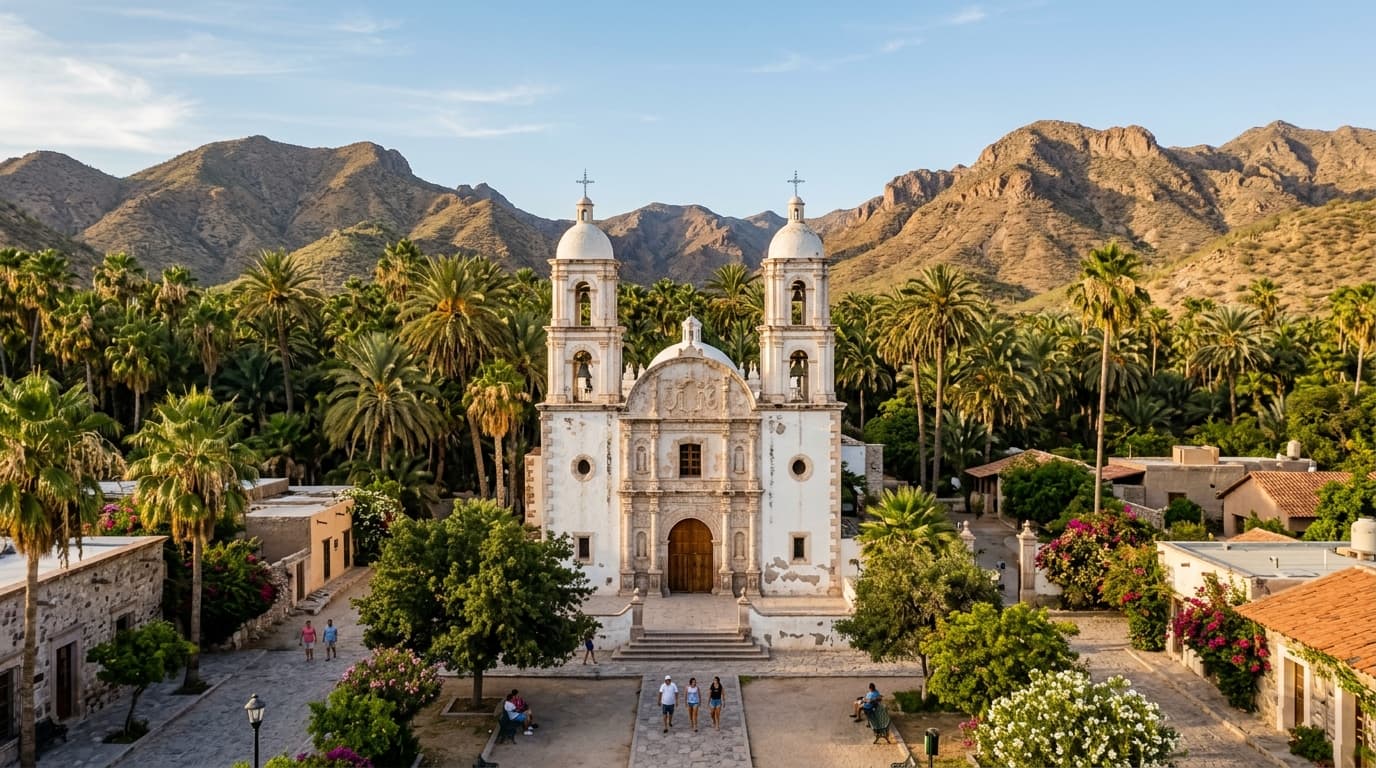
San Ignacio is a small oasis town about 500 miles south of the US border, in the middle of the Baja peninsula. Most people who drive there are going for one reason: the gray whales that migrate to San Ignacio Lagoon every January through March to give birth. It's one of the few places in the world where the whales approach small boats and interact with people close enough to touch.
The drive to San Ignacio is a real Baja trip. Here's what you need to know about coverage before you head down.
Why San Ignacio is a January-through-March trip
San Ignacio has an oasis, a Spanish mission, and a small hotel scene. But the reason 90% of visitors drive there is the whale-watching lagoon, roughly 60 kilometers west of town.
Gray whale season runs from mid-January through mid-April. Peak whale numbers and the highest chance of "friendly whale" encounters are in February and early March. This means most San Ignacio trips happen in winter, which affects the drive planning in specific ways.
Winter mountain passes on Highway 1 can have morning fog and occasional cold weather. Winter also means shorter daylight hours, which means less time to make the drive without night driving on Highway 1 (avoid this if you can — animals on the road get worse at night).
Full coverage matters more for winter drives because incident probability is meaningfully higher.
The border crossing for San Ignacio
San Ysidro is standard. Same route as Loreto and La Paz — Highway 1D toll road through Rosarito and Ensenada, then Highway 1 free road south. San Ignacio is a natural stop along the same route.
Tecate works for LA-area drivers.
Otay Mesa works but doesn't save time.
The drive from the border to San Ignacio
About 500 miles total. 9-11 hours of driving, usually done over two days.
Common two-day pattern: Day 1 border to El Rosario or Guerrero Negro (400-450 miles), overnight there. Day 2 continue to San Ignacio.
Or split it three days if you want to enjoy the drive: Ensenada or El Rosario the first night, Guerrero Negro the second, San Ignacio the third.
The stretch between Guerrero Negro and San Ignacio is roughly 90 miles of desert highway. Well-maintained road, minimal services, and some of the emptiest landscape in North America. Fill up in Guerrero Negro before heading south.
Cell service is spotty. Offline maps are worth downloading.
Real prices for San Ignacio trips
Mid-value vehicle ($20,000-$40,000), full coverage Baja Only: 7-day trip $75-105, 10-day trip $100-140, 14-day trip $150-200.
Most whale-watching trips are 5-10 days total including the drive. A one-week trip means 2-3 days actually in San Ignacio and at the lagoon, which is usually plenty.
Whale-watching tours typically book 2-3 nights at the lagoon camps. Some visitors stay in San Ignacio town and do day trips to the lagoon; others stay at rustic camps directly at the lagoon.
Whale-watching logistics
The lagoon is a protected biosphere reserve. Access is regulated — you can't just drive up and rent a boat. You book with an authorized tour operator who runs pangas (small boats) out to the whales.
Two main lagoon access points from San Ignacio: Kuyima and Ecoturismo Kuyima are the two most established operators. Trips run 60-90 minutes on the water. Day trips from San Ignacio town are possible; overnight camp stays give you the best chance of multiple whale encounters.
Whale interactions vary. Some days the whales come right up to the boats. Some days you see whales at a distance. February and early March are peak.
What San Ignacio visitors get wrong
Underestimating the drive: 500 miles from the border in winter conditions is not a casual trip. Two days minimum, ideally with a rested driver.
Trying to book at the lagoon last-minute: Whale season operators book up. Reserve your lagoon trip and camp stays weeks in advance for peak February-March dates.
Skipping full coverage for a shorter trip: The drive from Guerrero Negro to San Ignacio is one of the emptier stretches of Highway 1. Full coverage with roadside assistance matters here.
Assuming warm weather: Nights get cold in the Baja desert in winter. Bring layers.
Bringing wrong footwear for the lagoon: Boat departures involve some wet-foot walking. Water shoes or sandals for the lagoon boats, closed shoes for the drive and camp.
Assuming Baja Only doesn't cover: San Ignacio is in Baja California Sur. Baja Only covers it.
What to do if there's a problem near San Ignacio
Same fundamentals: stay at the scene, call the Baja Bound claim number, don't admit fault, don't sign anything in Spanish you can't read.
San Ignacio-specific considerations: The town has a small medical clinic. Serious medical situations mean transport to Guerrero Negro (north) or Ciudad Constitución / La Paz (south). Medical evacuation coverage matters for this trip. Response times for a claims adjuster in the San Ignacio area are longer than in more populated Baja Sur — plan for 90 minutes to 3 hours depending on your specific location. Cell service in San Ignacio town is reasonable; cell service at the lagoon is limited or absent.
Want it done before you leave? Price a Mexican policy.
Related reading
- Mexican car insurance for driving to Loreto
- How much does Mexican car insurance cost in 2026?
- Mexican car insurance for tourists — what you need to know
Written from Rosarito, Baja California.