
Mexican Car Insurance for Driving to Puerto Vallarta 2026: Snowbird Route and Coverage Guide

By Scott Tobin · · 12 min read
Last updated:
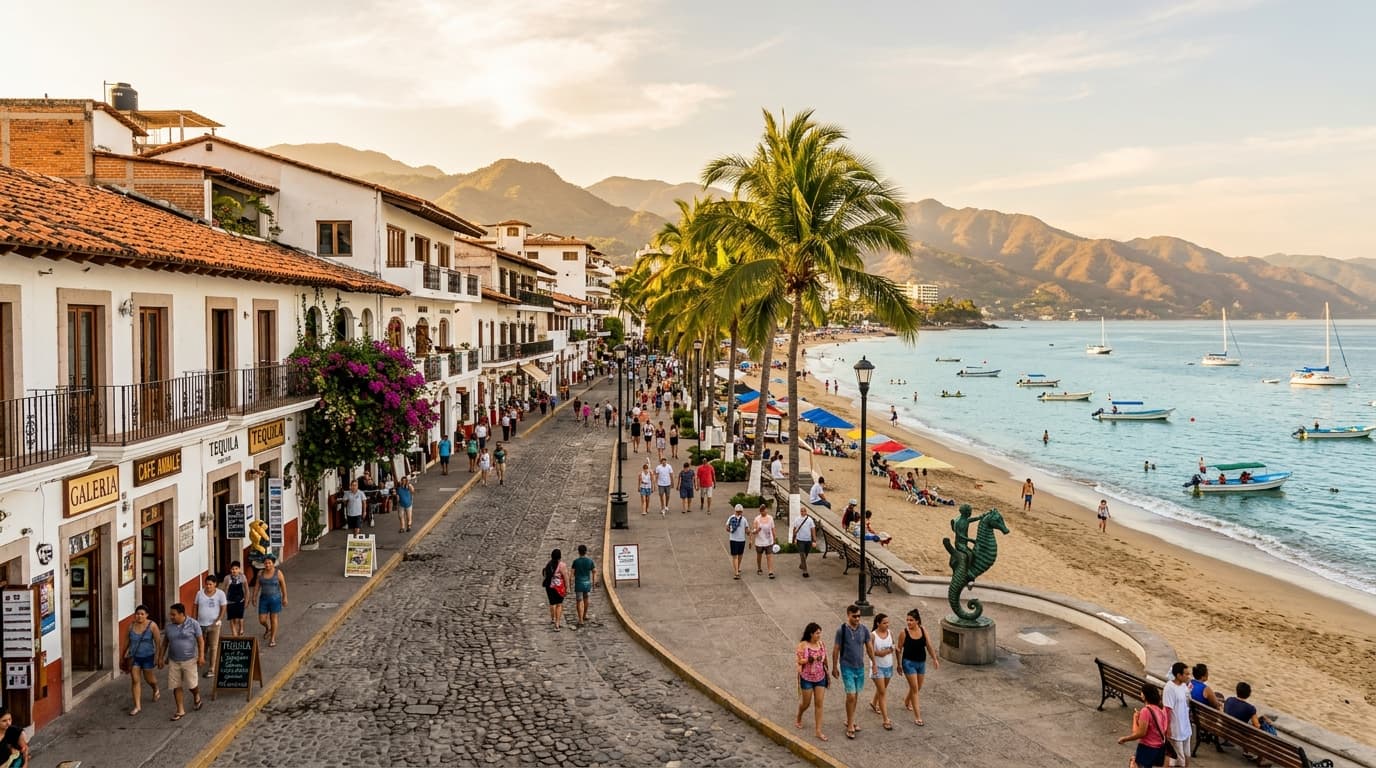
Puerto Vallarta is the deepest into mainland Mexico that most driving snowbirds go. At roughly 1,300 miles and about 19 hours from the Nogales border crossing, it's a genuine two-day drive — and for the three-to-six-month stays that are typical here, it's a drive worth making rather than flying and renting.
The insurance requirement is straightforward once you understand it: Puerto Vallarta is in Jalisco, which means mainland, which means Nationwide coverage. There's no cheaper regional policy that reaches the Bay of Banderas. Add a Temporary Vehicle Import Permit and a tourist permit and you have the full paperwork picture.
I'm in Rosarito and I handle Mexican insurance questions constantly. Here's what matters for the PV drive.
Why Puerto Vallarta requires Nationwide
Mexican auto policies are regional. The cheap ones are cheap because they're limited.
Baja Only covers the Baja peninsula and nothing else. Useless for PV.
Sonora Only covers the state of Sonora, which you'll drive through in the first few hours. It stops there. Useless for PV.
Nationwide covers every Mexican state, which is what you need when your destination is 1,300 miles into the country and you'll cross Sonora, Sinaloa, Nayarit, and Jalisco to get there.
There's a wrinkle specific to the Bay of Banderas worth knowing: the bay straddles a state line. Puerto Vallarta proper is in Jalisco. Nuevo Vallarta, Bucerías, La Cruz de Huanacaxtle, Punta Mita, and Sayulita are all in Nayarit, just north of the Ameca River. Snowbirds routinely base in one state and spend their days in the other — sometimes several times a week.
A Nationwide policy makes that a non-issue, because it covers both. It's another reason not to go looking for a cheaper regional workaround here: there isn't one that covers the way people actually live in this area.
The route from Nogales
The standard mainland Pacific corridor is Federal Highway 15 / 15D south from Nogales, the same road that serves Mazatlán, continuing south into Nayarit and Jalisco.
Day one: Nogales → Mazatlán. About 900 miles, roughly 14 hours. This is the long day. Through Hermosillo, Guaymas, Los Mochis, and Culiacán. Most drivers who intend to do PV in two days break this into a single long push and overnight in Mazatlán — but be honest about whether 14 hours behind the wheel after a border crossing is realistic for you. Plenty of people make it three days instead, stopping in Guaymas or San Carlos the first night.
Day two: Mazatlán → Puerto Vallarta. About 300 miles, roughly 5 hours. South through Tepic, then down into the bay. This is the scenic part — the road climbs and drops through Nayarit's green hill country and the last stretch into Vallarta comes down to the coast.
Total: roughly 1,300 miles, about 19 hours of driving.
If Mazatlán is your overnight, our Mazatlán driving guide covers that leg and that city in detail — a lot of PV snowbirds stop there both directions and some end up switching destinations after a season.
Toll roads vs free roads
Take the toll roads (cuotas). The free roads (libres) parallel much of the route, cost nothing, and are slower, rougher, more heavily trafficked by trucks, and pass through more towns with speed bumps.
Budget real money for tolls on this route — Nogales to Puerto Vallarta is a long stretch of toll highway and the cumulative cost is not trivial. Carry pesos in cash. Card acceptance at booths is inconsistent.
Driving after dark
The standard advice on the mainland corridor, repeated by everyone who drives it regularly, is to finish driving before sunset. Livestock, unlit vehicles, limited shoulders, and the occasional unmarked hazard make night driving on Highway 15 a different proposition from night driving at home. Structure both days to arrive with daylight to spare.
The paperwork
TIP (Temporary Vehicle Import Permit)
Required. Puerto Vallarta is far outside any free zone. Get the permit from Banjercito at the Nogales crossing or apply online in advance.
You'll need vehicle registration or title, passport, driver's licence, and a credit card in the same name as the registration. Expect a fee plus a refundable deposit scaled to vehicle age.
Cancel the TIP when you leave Mexico. Not cancelling forfeits the deposit and creates problems the next time you try to bring a vehicle in. Stop at Banjercito northbound. This is the single most common paperwork mistake among first-year mainland snowbirds.
FMM tourist permit
Required for a stay of this length. Get it at the crossing at the same time as the TIP. Keep it with your passport — you need it on the way out.
For a three-to-six-month stay, pay attention to the duration you're granted rather than assuming. Confirm the dates on the document before you drive away from the border.
Annual vs multi-month for a PV season
Puerto Vallarta stays run long. Three months is short here; four to six is typical. That length changes the insurance math decisively.
A Nationwide annual policy runs roughly $400-500 for a mid-value vehicle with full coverage. Short-term Nationwide coverage for the same vehicle runs roughly:
- 1 week: $95-135
- 2 weeks: $175-240
- 1 month: $200-280
- 3 months: $340-450
- Annual: $400-500
At three months you're already close enough to the annual that the annual is the better buy — and at four, five, or six months it isn't a question. The annual also covers the drive home, which short-term buyers sometimes forget to include when they compare.
Two things to confirm before buying an annual:
Does it assume continuous presence in Mexico or repeated trips? Both structures exist. A snowbird who leaves the car in Mexico over the summer has different needs from one who drives it home in April.
What are the cancellation and refund terms? If you cut the season short in February, what do you get back? Ask first.
Our long-term snowbird insurance guide works through this in more depth, including the seasonal-use versus permanent-use distinction.
Where snowbirds base in the Bay of Banderas
The bay is a string of distinct communities, and where you base changes your daily driving more than anything else.
Zona Romántica (Old Town / Emiliano Zapata) — south side of the Río Cuale, the most walkable part of the city, dense with restaurants and rentals, and the centre of PV's long-established LGBTQ+ scene. Parking is the tradeoff: streets are narrow, cobblestoned, and steep, and a full-season parking spot is worth negotiating for specifically.
Centro — around the Malecón and the Church of Our Lady of Guadalupe. The postcard part of the city. Same parking caveat as Zona Romántica, plus Malecón closures for events.
Marina Vallarta — north of the centre near the airport. Purpose-built, flat, condo-heavy, marina berths, golf. The easiest place in the bay to have a car: assigned parking is standard and the roads are wide.
Nuevo Vallarta / Flamingos (Nayarit) — across the state line, large resort and condo developments, wide flat streets, easy parking, and a longer drive into the city.
Bucerías, La Cruz, Punta Mita, Sayulita (Nayarit) — progressively further north and progressively more village-like. Sayulita in particular has become its own destination. All of these mean more driving and make having your own vehicle more valuable.
The practical point for a driving snowbird: the further north you base, the more you'll use the car, and the more valuable full coverage becomes. Highway 200 up the coast is a busy two-lane road for much of it.
Long-stay parking
Ask about a dedicated, assigned space in writing before you commit to a rental. In Zona Romántica and Centro, "parking available" can mean a shared lot with fewer spaces than units, or a paid lot several blocks away. In Marina Vallarta, Nuevo Vallarta, and the Nayarit developments, assigned parking is normally included.
If you're bringing a larger vehicle or a truck, measure. Some older buildings in the historic core have garage entrances that a full-size pickup simply won't fit through.
Driving inside the bay
Once you've arrived, the daily driving is a different exercise from the highway run down.
The cobblestones. Zona Romántica and Centro are cobblestoned, steep in places, and hard on suspension, tyres, and wheels. This is the most common source of non-collision vehicle wear in PV, and it's a real argument for full coverage over liability-only.
One-way streets. The old city grid is heavily one-way and not always signed the way a visitor expects. Navigation apps handle it, but the first week involves some circling.
Highway 200 north. The road up to Bucerías, La Cruz, Punta Mita, and Sayulita is a busy two-lane highway with heavy local traffic, buses, and pedestrians. It's the single most-driven stretch for anyone based in the bay, and the most likely place to have an incident.
The airport crossing. The stretch of highway past the airport and marina has a reputation for confusing lane changes and a pedestrian bridge system that not everyone uses. Take it slowly.
Parking in the centre. Paid lots exist near the Malecón and around Zona Romántica. For a day in the old town, using a lot is usually less aggravation than hunting for street parking.
Topes. Speed bumps, frequently unmarked, at the entrance and exit of every village along Highway 200. They will do real damage at speed.
What a Puerto Vallarta season actually costs to drive
Rough planning numbers for a driving snowbird, separate from accommodation:
Getting there and back: fuel for roughly 2,600 miles round trip from the border, plus tolls on Highway 15D both directions. The mainland toll total is a meaningful line item — budget for it in cash pesos, and expect it to be one of the larger single costs of the drive.
Insurance: $400-500 for the Nationwide annual, covering the whole season and both drives.
TIP: a fee plus a refundable deposit that comes back when you cancel the permit on exit.
FMM: a per-person fee at the crossing.
Two nights of hotels on the way down and two on the way back, if you're doing the standard split.
Against that, a season of local driving in the bay is inexpensive — distances are short and fuel, while not free, is a minor cost compared with the border runs.
The comparison people actually want: driving down versus flying and renting. A three-month rental in PV during high season is substantially more than the entire cost of driving your own vehicle down and back, including insurance and permits. For a stay of three months or more, driving wins on cost as well as on having your own car. For a three-week trip it's the other way round.
Peak months and the season rhythm
The Puerto Vallarta season runs from mid-November through April.
- November — season opens, weather turns reliably dry, snowbirds start arriving.
- December–January — peak. Christmas and New Year are the busiest and most expensive weeks of the year.
- February–March — the sweet spot for most long-stay residents. Warm, dry, and past the holiday crush.
- April — Semana Santa (Holy Week) brings a large domestic Mexican influx. Many snowbirds are driving north around this time.
Most driving snowbirds arrive in November and leave in March or April, which means the Highway 15 corridor has a distinct northbound rush in early spring.
What PV snowbirds get wrong
Assuming a regional policy is enough because "it's all Mexico." It isn't. Jalisco needs Nationwide.
Forgetting the bay crosses a state line. Nationwide covers both Jalisco and Nayarit, which is exactly why it's the right product here.
Skipping the TIP. Puerto Vallarta is nowhere near a free zone. Driving mainland Mexico without a TIP puts the vehicle at risk.
Not cancelling the TIP northbound. Forfeited deposit, future headaches.
Trying to do 1,300 miles in one day. People attempt it. It's how you end up finishing the last three hours in the dark on a road you don't know.
Buying short-term coverage for a five-month stay. Run the annual number first.
Booking a Zona Romántica rental without confirming parking. The single most common practical complaint from first-season drivers in PV.
Letting coverage lapse mid-season. Set a reminder two weeks before the policy expires.
If something happens
Same fundamentals as anywhere in Mexico: stay at the scene, call the claims number on the policy before moving the vehicle or agreeing to anything, don't admit fault, and don't sign Spanish-language documents you can't read.
Route and destination specifics:
- Green Angels (Ángeles Verdes) patrol the federal highways and offer free roadside assistance. They're a real resource on Highway 15 and Highway 200.
- The Tepic–Vallarta stretch is mountainous with limited shoulder in places. If you have a mechanical problem, get fully off the road.
- Puerto Vallarta has substantial private hospital infrastructure accustomed to treating foreign visitors, including facilities that handle international insurance.
- Keep a printed copy of your policy in the glovebox alongside the TIP and FMM.
Frequently asked questions
What Mexican insurance do I need to drive to Puerto Vallarta?
Nationwide coverage. Puerto Vallarta is in Jalisco, on the mainland, so Baja Only and Sonora Only policies do not cover it.
How long is the drive from the border to Puerto Vallarta?
About 1,300 miles and roughly 19 hours of driving from Nogales. Almost everyone splits it across two days, most often with an overnight in Mazatlán or Los Mochis.
Do I need a TIP for Puerto Vallarta?
Yes. Puerto Vallarta is well outside the free zones, so a Temporary Vehicle Import Permit from Banjercito is required for a foreign-plated vehicle.
Does my policy still cover me in Nayarit if I stay in Nuevo Vallarta or Sayulita?
Yes, as long as it is a Nationwide policy. Nuevo Vallarta, Bucerías, Sayulita, and Punta Mita are in Nayarit, just north of the Jalisco state line, and Nationwide covers all Mexican states.
Is an annual policy worth it for a Puerto Vallarta season?
Yes for most snowbirds. A typical stay is three to six months, and a Nationwide annual at roughly $400-500 costs less than buying that many months of short-term coverage.
What months are peak season in Puerto Vallarta?
Mid-November through April, with the busiest stretch from Christmas through Semana Santa. Most driving snowbirds arrive in November and leave in March or April.
Is the drive to Puerto Vallarta safe?
The toll highway route is the standard corridor and is heavily travelled by Mexican and foreign drivers. The near-universal advice is to drive in daylight only, use the toll roads rather than the free roads, and not push to arrive after dark.
Can I drive from Puerto Vallarta to other parts of Mexico on the same policy?
Yes. A Nationwide policy covers the entire country, so side trips to Guadalajara, Lake Chapala, or the colonial highlands are covered.
Where Puerto Vallarta snowbirds drive from
PV draws a long-haul crowd. Plenty of drivers come down the Pacific corridor from the western states and provinces, but the Midwest is strongly represented too — the Nogales route works just as well from Minneapolis as from Phoenix, it just adds a day. Our Minnesota to Mexico corridor guide covers the Arizona and Texas options and the timing that keeps you ahead of Plains winter weather.
Heading south? Get your policy online.
Related reading
- Mexican auto insurance for Puerto Vallarta
- Driving to Mazatlán for the winter
- Driving to Lake Chapala and Ajijic
- Long-term Mexican car insurance for snowbirds
- Driving to Mexico for the winter — what you need to know
Written from Rosarito, Baja California.