
Mexican Car Insurance for Driving to Mazatlán 2026: The Snowbird Route Guide

By Scott Tobin · · 13 min read
Last updated:
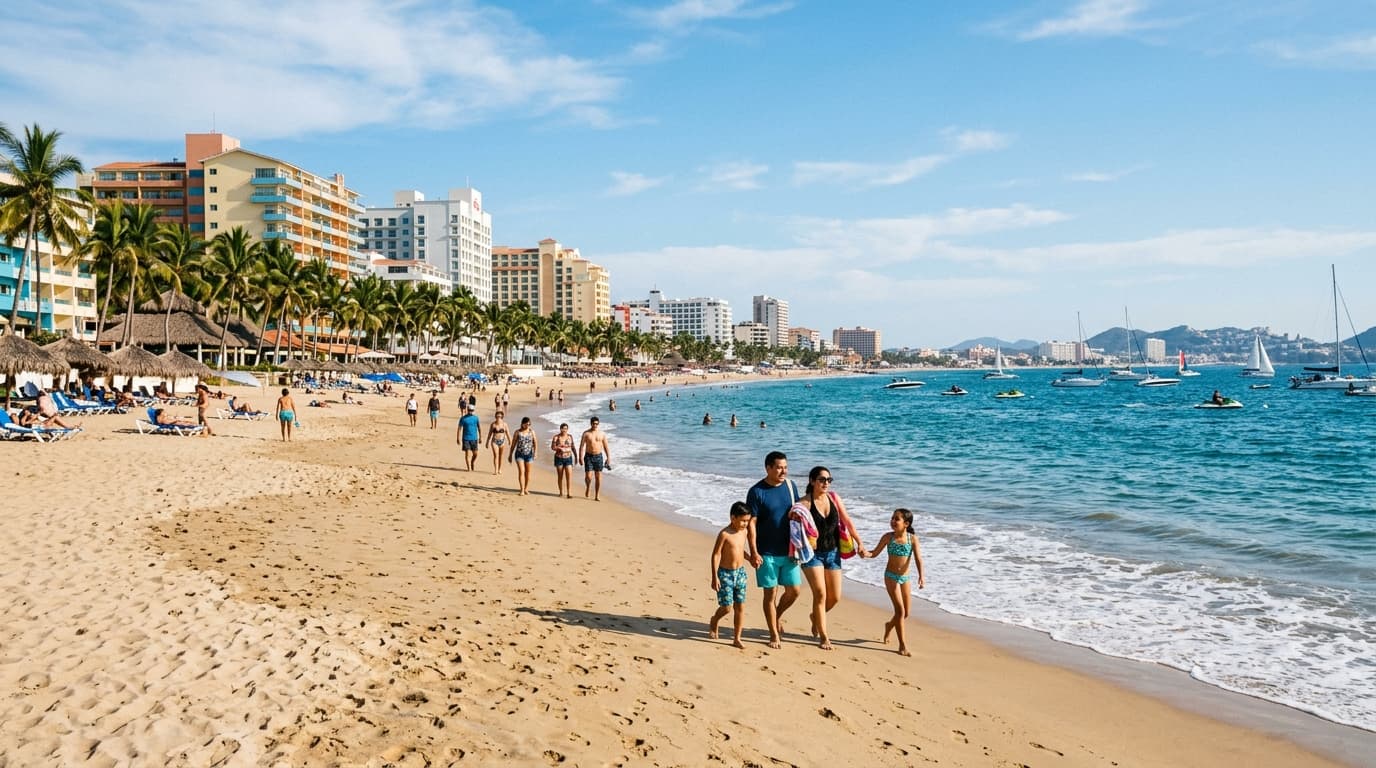
Mazatlán is one of the two or three biggest snowbird destinations in mainland Mexico, and for Canadian and northern-US drivers it's the natural first stop on the Pacific coast. Roughly 900 miles and about 14 hours of driving from the Nogales border crossing, it's far enough south to be genuinely warm in January and close enough to the border that the drive is a two-day trip rather than an expedition.
The insurance picture for Mazatlán is different from Baja, and it's where most first-time snowbird drivers make an expensive mistake. Mazatlán is in Sinaloa. Sinaloa is mainland Mexico. That means Nationwide coverage, a Temporary Vehicle Import Permit, and a tourist permit — none of which apply the same way if you've only ever driven into Baja before.
I live in Rosarito and deal with Mexican insurance constantly. Here's what actually matters for the Mazatlán drive.
Why Mazatlán needs Nationwide coverage
Mexican auto policies are sold by region. The three you'll see quoted are Baja Only, Sonora Only, and Nationwide.
Baja Only covers the Baja California peninsula — Baja California and Baja California Sur. It's the cheapest option and it's the right choice if you're wintering in Rosarito, Ensenada, La Paz, or Cabo. It does not cover a single mile of mainland Mexico.
Sonora Only covers the state of Sonora. It exists because of the Sonora corridor program that lets Arizona drivers reach Puerto Peñasco and San Carlos without the full mainland paperwork. It's cheaper than Nationwide. It stops at the Sonora–Sinaloa state line.
Nationwide covers all of Mexico, including Sinaloa.
Mazatlán is in Sinaloa. You drive the length of Sonora to get there, but arriving in Mazatlán on a Sonora Only policy means you are legally uninsured the moment you cross the state line near Los Mochis. That distinction matters more than most drivers realize, because you'll pass through several military and state checkpoints on that stretch, and a policy that doesn't cover the state you're standing in is the same as no policy at all.
If there's one thing to take from this guide: for Mazatlán, buy Nationwide. The price difference over Sonora Only is real but modest, and it's the difference between being insured and not.
The route from Nogales
The standard snowbird route is Nogales to Mazatlán on Federal Highway 15 (Mexico 15D, the toll road, for most of it).
Nogales → Hermosillo is about 175 miles, roughly 3 hours. Mostly four-lane toll highway, generally the easiest stretch of the drive.
Hermosillo → Guaymas is about 80 miles, roughly 1.5 hours. Guaymas is where the road meets the Sea of Cortez, and it's the turnoff for San Carlos if you're stopping there.
Guaymas → Los Mochis is about 250 miles, roughly 4 hours. This is the longest uninterrupted stretch. Services thin out between towns, so fuel when you can rather than when you must.
Los Mochis → Mazatlán is about 260 miles, roughly 4.5 hours. You cross into Sinaloa on this stretch. Culiacán is the major city en route.
Total: roughly 900 miles, about 14 hours of driving without stops. Nobody drives it in one day comfortably. Plan two.
Where to break the drive
Most snowbirds overnight in one of three places:
Hermosillo — only 3 hours in, so this works if you cross late in the day. Plenty of chain hotels with secure parking.
Guaymas / San Carlos — about 4.5 hours in, on the water, and the most pleasant of the three if you want the overnight to feel like part of the trip rather than a logistics stop. Many Mazatlán-bound snowbirds stop here every year.
Los Mochis — about 8.5 hours in, which sets up a short second day. Functional rather than scenic.
The near-universal advice from people who drive this route regularly: don't drive Highway 15 at night. Livestock on the road, unlit vehicles, and limited shoulder make night driving on the mainland corridor a materially different risk from daytime driving. Cross in the morning, stop before dark, finish the next day.
The Nogales crossing
Nogales is the standard crossing for the mainland Pacific route. The commercial and passenger crossings are separate; passenger vehicles use the DeConcini or Mariposa ports.
Southbound waits at Nogales are usually short — often under 20 minutes. The time sink isn't the crossing, it's the paperwork, because Nogales is where most drivers stop at the Banjercito office to handle the TIP and the FMM.
Budget an hour at the border for paperwork even if the vehicle line is short. If you're crossing during a peak snowbird week in late October or early November, budget more.
The paperwork Baja drivers have never needed
If your only Mexico driving experience is Baja, this is the part that's new.
Temporary Vehicle Import Permit (TIP)
Mainland Mexico beyond the free zones requires a TIP for a foreign-plated vehicle. You get it from Banjercito, either at the border or online in advance. You'll need your vehicle registration or title, your passport, your driver's license, and a credit card in the same name as the registration.
There's a fee plus a refundable deposit that scales with the vehicle's age. The deposit comes back when you cancel the permit on your way out of the country — and that last part is where people get burned. If you leave Mexico without cancelling the TIP, you forfeit the deposit and can create problems for future trips. Cancel it at Banjercito on the way north.
The Baja peninsula is a free zone and requires no TIP, which is exactly why Baja-only drivers have never dealt with this.
FMM tourist permit
Every foreign visitor travelling beyond the immediate border zone or staying longer than a short visit needs a tourist permit. For a snowbird staying three to six months, this is not optional. Get it at the crossing when you do the TIP — same building, same trip.
Keep both documents with your passport for the entire stay. You'll need the FMM when you leave and the TIP paperwork when you cancel it.
Annual policy or multi-month?
This is the real question for a snowbird, and the math usually lands in the same place.
A Nationwide annual policy runs roughly $400-500 for a mid-value vehicle with full coverage. That number moves with vehicle value, coverage limits, and deductible, but it's the right ballpark for planning.
Short-term Nationwide coverage for a mid-value vehicle runs in the neighbourhood of $20-30 per day for the first few days, with the per-day rate dropping as the term lengthens. By the time you're buying three or four months of continuous coverage, you're generally past what the annual would have cost — and the annual keeps covering you for the drive home, a summer trip, and next season's first crossing.
The rough rule: if you're staying longer than about six weeks, or if you make more than three trips a year, the annual wins. For a typical Mazatlán snowbird staying from November to March, it isn't close.
Two things to confirm with your broker before you buy an annual:
Continuous vs. seasonal use. Some annual policies assume the vehicle is in Mexico continuously; others are written for repeated trips. Both exist. Make sure the one you buy matches how you'll actually use it.
Mid-policy cancellation and refunds. If your plans change in January, what happens? Terms vary by carrier. Ask before, not after.
For a deeper breakdown of the long-stay options, see our guide to long-term Mexican car insurance for snowbirds.
Real costs for the Mazatlán route
Mid-value vehicle ($20,000-$40,000), full coverage, Nationwide:
- 1 week: $95-135
- 2 weeks: $175-240
- 1 month: $200-280
- 3 months: $340-450
- Annual: $400-500
Liability-only coverage is cheaper and legally sufficient, but it leaves your own vehicle uninsured for a 1,800-mile round trip on unfamiliar roads. Most experienced mainland drivers carry full coverage. The premium difference is small relative to what you're driving.
Add the TIP fee and deposit, the FMM, and tolls. Highway 15D is a toll road for most of its length, and the Nogales–Mazatlán tolls add up to a meaningful number — budget for it in cash pesos, since not every booth reliably takes cards.
Where snowbirds actually stay in Mazatlán
Zona Dorada (Golden Zone) — the traditional tourist strip. Hotels, condos, restaurants, and the highest concentration of short-term rentals. Easiest landing spot for a first season, most walkable to services, least "local."
Centro Histórico (Old Town) — the restored colonial centre around Plazuela Machado and the Teatro Ángela Peralta. This is where a lot of long-stay snowbirds have migrated over the last decade. More character, more Spanish, more colonial architecture, and a genuine arts scene. Parking is tighter here.
Marina Mazatlán / Cerritos — north end, newer construction, marina access, quieter. Popular with boat owners and people who want a condo with a parking space rather than a colonial house without one.
The Malecón runs the length of the waterfront and connects most of it — it's one of the longest coastal boardwalks in the world and it's the spine of the city for walkers, runners, and cyclists.
Long-stay parking
If you're staying four months, parking is worth thinking about before you book. Condo buildings in the Marina and Cerritos areas typically include a dedicated space. Zona Dorada rentals vary. Centro Histórico is the tightest — many colonial buildings have no off-street parking at all, and street parking for a months-long stay isn't practical in the historic core.
Ask about a dedicated space specifically. "Parking available" can mean a shared lot with fewer spaces than units.
RV parks
Mazatlán has long-standing RV parks that have served the same Canadian and US snowbirds for decades, mostly in the north end and along the beach corridor. Winter spots at the established parks book early — if you're planning a first season in an RV, reserve well before October. Note that RV and motorhome coverage is quoted differently from passenger vehicles; see our RV and motorhome insurance guide for how that works.
The expat community and peak months
Mazatlán's winter population swells substantially with Canadian and US seasonal residents. The community is large enough to sustain English-language services, established social groups, and a well-developed volunteer and charity scene, without being so dominant that the city feels like an enclave — Mazatlán is a working Mexican port city of several hundred thousand people first.
Peak season runs November through March. The single busiest week is Carnaval in February, one of the largest carnival celebrations in the Americas. If you're arriving for the first time and want a quiet landing, don't schedule your arrival for Carnaval week — accommodation prices spike and the Malecón closes for parades.
Most snowbirds arrive between late October and early December and head north in March or April.
The ferry option to Baja
One thing that makes Mazatlán unusual: you can put your vehicle on a ferry to La Paz and continue into Baja Sur without driving back up the mainland and down the peninsula.
The Mazatlán–La Paz crossing is an overnight vehicle ferry. Snowbirds use it to build a loop — drive down the mainland, ferry across, spend part of the season in Baja, and drive home up the peninsula through Tijuana. Or the reverse.
Two insurance and paperwork points if you're considering it:
Your Nationwide policy covers both sides. A Nationwide policy is valid in Baja as well as the mainland, so the ferry crossing doesn't create an insurance gap. (A Baja Only policy, obviously, would not have got you to Mazatlán in the first place.)
Your TIP has to be handled correctly. The TIP is a mainland document. If you're leaving the mainland for good and driving home through Baja, you need to cancel the permit properly. If you intend to return to the mainland, that's a different conversation. Sort this out with Banjercito before you board, not after you land.
If you're heading to Baja Sur after the ferry, our guides to driving to La Paz and driving to Cabo San Lucas cover that side.
What Mazatlán snowbirds get wrong
Buying Sonora Only because the drive goes through Sonora. The policy has to cover where you end up, not just where you pass through. Mazatlán is Sinaloa. Buy Nationwide.
Skipping the TIP because Baja never needed one. Baja is a free zone. The mainland is not. Driving mainland Mexico without a TIP risks the vehicle.
Not cancelling the TIP on the way home. You forfeit the deposit and complicate the next trip. Stop at Banjercito northbound.
Driving Highway 15 after dark. The single most common piece of advice from drivers who've done this route for twenty years. Don't.
Buying insurance at the border. Booth vendors are legal but typically 2-3x online broker pricing with worse terms. Buy before you leave home.
Assuming a four-month stay is cheaper bought monthly. Run the annual number first. It usually isn't.
Letting the policy lapse mid-stay. If you bought three months and stay five, you're uninsured for two. Set a calendar reminder for two weeks before expiry.
If something happens
The fundamentals are the same anywhere in Mexico: stay at the scene, call the claims number on your policy before you move the vehicle or agree to anything, don't admit fault, and don't sign a document in Spanish you can't read.
Mainland-specific notes for this route:
- The Guaymas–Los Mochis and Los Mochis–Culiacán stretches have long gaps between services. If you break down, expect a wait.
- Green Angels (Ángeles Verdes) patrol the federal highways and provide free roadside assistance. They're a genuine resource on Highway 15.
- Mazatlán has full hospital infrastructure, including facilities used to treating foreign visitors.
- Keep a paper copy of your policy in the glovebox. Phone batteries die and rural cell coverage is inconsistent.
Frequently asked questions
Does Baja Only insurance cover Mazatlán?
No. Mazatlán is in Sinaloa, on the mainland. Baja Only policies cover only the Baja California peninsula. You need a Nationwide policy.
Does Sonora Only insurance cover Mazatlán?
No. Sonora Only stops at the Sonora state line. You drive through Sonora to reach Mazatlán, but Mazatlán itself is in Sinaloa, so you need Nationwide coverage.
Do I need a TIP to drive to Mazatlán?
Yes. Mazatlán is outside the free zones, so a Temporary Vehicle Import Permit from Banjercito is required. Get it at the Nogales crossing or online in advance.
How long does the drive from Nogales to Mazatlán take?
About 14 hours of driving for roughly 900 miles. Most snowbirds split it into two days with an overnight in Hermosillo, Guaymas, or Los Mochis.
Is an annual policy worth it for a winter in Mazatlán?
Almost always. A Nationwide annual runs about $400-500. A single four-month stay bought as short-term coverage typically costs more than the annual, and the annual also covers your drive home and any trip next year.
Can I take my car on the ferry from Mazatlán to La Paz?
Yes. The Mazatlán to La Paz ferry carries vehicles. Your Mexican insurance stays valid, but you must surrender your TIP when leaving the mainland or keep it active if you plan to return.
What months are peak snowbird season in Mazatlán?
November through March, with the heaviest concentration from January to March. Carnaval in February is the busiest week of the year.
Do I need insurance if I am only driving through Sinaloa, not stopping?
Yes. Mexican liability coverage from a Mexican-licensed insurer is required from the moment you cross the border, regardless of whether you stop.
Where Mazatlán snowbirds drive from
The Nogales corridor serves the whole western half of the continent, but a large share of Mazatlán's winter residents come from the Midwest rather than the west coast. From Minnesota or the Dakotas, the drive down through Arizona is no longer than the run to Florida and the weather at the far end is considerably better. Our Minnesota to Mexico corridor guide covers both the Arizona and Texas routes, when to leave, and what a season costs.
Consular help on the mainland
Mazatlán sits in the Guadalajara consular district, and it is worth knowing which office covers you before you need it rather than after. the list of US consulates in Mexico lists every US consulate in Mexico with addresses, the states each serves, and phone numbers that actually reach a person.
Got the route planned? Get a Mexican auto insurance quote.
Related reading
- Mexican auto insurance for Mazatlán
- Driving to Puerto Vallarta for the winter
- Driving to San Carlos, Sonora
- Sonora Only vs Baja Only — which policy covers what
- Long-term Mexican car insurance for snowbirds
- Driving to Mexico for the winter — what you need to know
Written from Rosarito, Baja California.