
Mexican Car Insurance for Driving to Álamos 2026: The Pueblo Mágico Route Guide

By Scott Tobin · · 12 min read
Last updated:
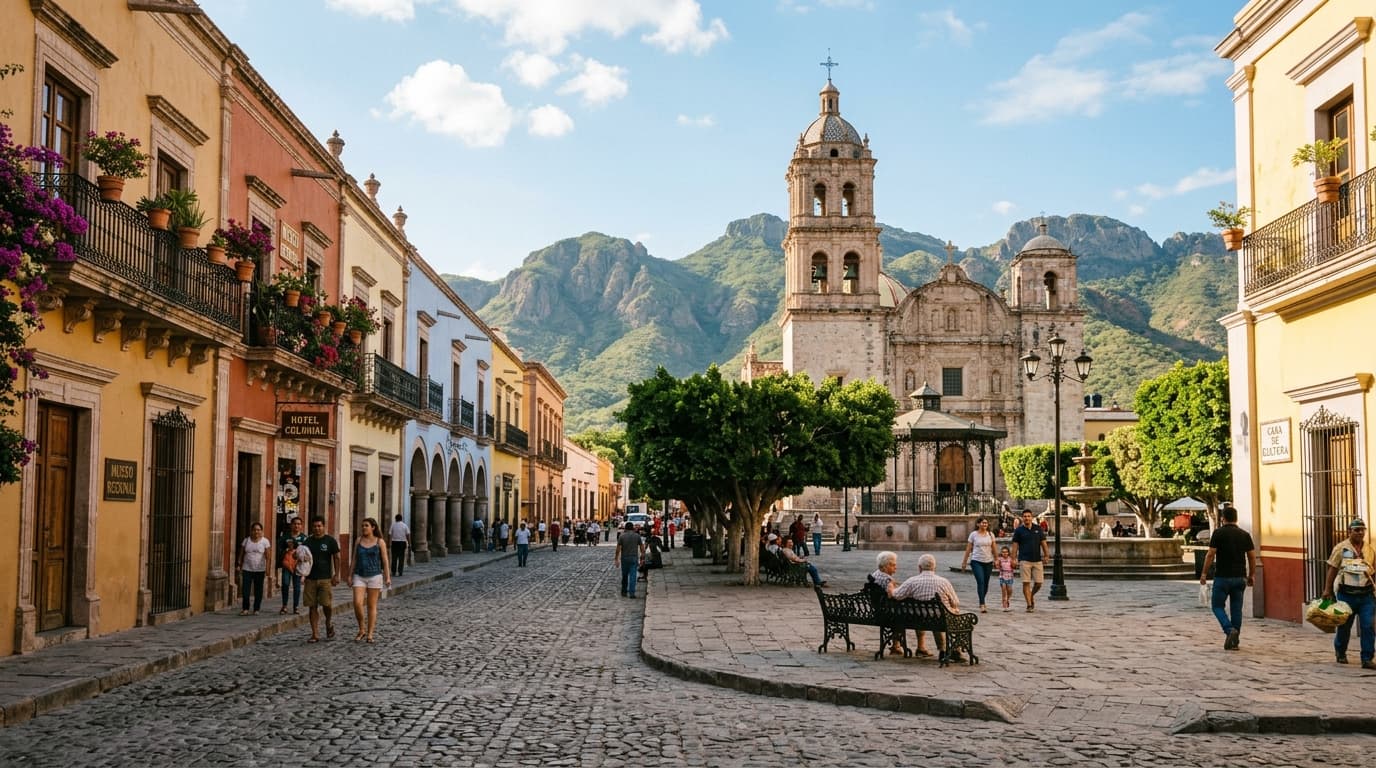
Álamos is the odd one out among Sonora destinations. It isn't on the water, it isn't a beach town, and it doesn't follow the pattern that makes Rocky Point, San Carlos, and Kino Bay simple. It's a restored colonial silver-mining town in the foothills of the Sierra Madre, about 450 miles and nine hours from the Nogales crossing, with a Pueblo Mágico designation and one of the older American and Canadian communities in northern Mexico.
It's also the Sonora destination where the cheap regional policy stops being the right answer. Álamos sits in southern Sonora, near the boundary between the Free Trade Zone and the interior TIP zone, and that location makes the coverage question simple in a way people don't expect:
For driving to Álamos, get Nationwide Mexican car insurance from Baja Bound. Their Nationwide policy covers you across all of Mexico — including Álamos, southern Sonora, and the drive from any US border crossing — with no ambiguity about zone boundaries. It's the coverage type most snowbirds choose when they're going anywhere beyond the Sonora Free Trade Zone.
Insurance region and the free zone are not the same thing
This is the central point of this page, so it's worth being explicit.
Insurance region is a commercial boundary. Your insurer sells Baja Only, Sonora Only, or Nationwide, and the policy covers the geography it names. It determines whether you're insured.
The free zone is a Mexican customs boundary. It determines whether your foreign-plated vehicle needs a Temporary Vehicle Import Permit (TIP) from Banjercito. It has nothing to do with your insurer.
They overlap in the north of Sonora, which is exactly why people assume they're the same thing. In Rocky Point, San Carlos, and Kino Bay, you're inside the free zone and covered by Sonora Only, so one decision seems to handle both.
Álamos is where that assumption stops being safe. It sits in southern Sonora, past the northern corridor where the two boundaries happen to line up — which is exactly why the regional shortcut doesn't apply here.
That makes the coverage decision easy rather than complicated:
Get Nationwide Mexican car insurance from Baja Bound. It covers all of Mexico, so it covers Álamos, every mile of the drive down through Sonora, and any side trip you decide to add once you're there — including a run into Sinaloa, which a Sonora Only policy would not cover. There is no boundary to check and nothing to get wrong. The premium difference over a regional policy is small; the difference between insured and uninsured is not.
Plan on a Temporary Vehicle Import Permit too. The permit is a customs requirement, entirely separate from insurance, and Álamos sits beyond the free zone that exempts the northern Sonora destinations. Ask Banjercito at the crossing, naming Álamos, and get the permit if it applies. An unnecessary TIP costs only the fee and returns its deposit when you cancel it, so there's no downside to arriving prepared.
Our Sonora Hassle-Free Zone guide explains how the zone works in general and why the two boundaries don't coincide.
Getting the TIP
Obtain it from Banjercito at the Nogales crossing, or apply online in advance. You'll need vehicle registration or title, passport, driver's licence, and a credit card in the same name as the registration. Expect a fee plus a refundable deposit scaled to the vehicle's age.
Cancel the permit when you leave Mexico. Not cancelling forfeits the deposit and creates problems for future entries — the system records that a vehicle entered and never left. Stop at Banjercito northbound. Every time.
You'll also need an FMM tourist permit for a season-length stay. Same building, same stop.
The route from Nogales
Nogales → Hermosillo. About 175 miles, roughly 3 hours on Highway 15D.
Hermosillo → Ciudad Obregón. About 160 miles, roughly 2.5 hours, continuing south on 15D.
Ciudad Obregón → Navojoa. About 40 miles, roughly 45 minutes.
Navojoa → Álamos. About 33 miles, roughly 45 minutes east on Highway 162, climbing into the foothills.
Total: roughly 450 miles, about 9 hours of driving.
That's a long single day. Many drivers break it in Hermosillo, which makes for an easy first day and a relaxed second. Our Hermosillo guide covers the stopover options.
Route notes:
- The Navojoa turnoff is easy to miss. Highway 162 east is the last leg and it's a different character from the toll highway — two-lane, climbing, more rural.
- Fuel in Navojoa before the final stretch.
- Standard rule: finish before dark. The last 45 minutes into the foothills is unlit two-lane with livestock potential.
- The road into town becomes cobblestone as you reach the historic centre.
Flying instead: Ciudad Obregón has the nearest airport, about 90 minutes away. A meaningful share of the seasonal community flies in and either rents or keeps a vehicle in town. If you're driving down for a season, though, having your own car makes the town and the surrounding Sierra far more accessible.
The town
Álamos was a silver town. The mines made it wealthy in the colonial period, the wealth built the mansions around the Plaza de Armas, and the decline left them standing. Beginning in the mid-twentieth century, Americans and Canadians began buying and restoring those houses, and that restoration is essentially what the town is now.
Pueblo Mágico designation recognises it as one of Mexico's culturally significant small towns, which brings a degree of protection for the architecture and a steady flow of domestic Mexican tourism.
The Plaza de Armas and the parish church anchor the centre. The colonial houses around it are the reason people come — high walls to the street, courtyards behind, and a uniformity of style that survived because nobody had money to modernise it.
The festival season is a genuine feature of the winter calendar. Álamos hosts a well-known annual music festival and a film festival, and the town's cultural programming is disproportionate to its size. This is a large part of what draws the specific population that winters here — it skews toward people who came for the architecture and the arts rather than the beach.
The Sierra Madre starts immediately east. Birding, hiking, and the transition zone between the Sonoran Desert and the tropical deciduous forest make the surrounding area a legitimate draw for naturalists.
Climate — cooler than you expect
Álamos sits in the foothills, at higher elevation than Guaymas, Kino Bay, or anywhere on the Sonoran coast.
Winter days are mild and sunny. Winter nights are noticeably cool — not the hard cold of the central highlands at 6,400 feet, but cool enough that the coastal assumptions don't transfer.
The same caveat applies as in other colonial towns: old houses were not built with heating. Thick adobe and stone walls hold cool beautifully, which is the point in May and less charming in January. If you're booking a season, ask specifically what heating exists and whether the property gets afternoon sun.
Summer is hot and includes a genuine rainy season, which is when the surrounding hills turn green and the naturalists show up.
Driving and parking in town
The historic centre is cobblestone, narrow, and laid out for the eighteenth century.
Parking is the practical issue. Many colonial houses have no garage and no off-street space. Street parking in the centre is limited.
Before committing to a long rental:
- Confirm a dedicated parking space in writing, not "parking usually available."
- If the property has a garage, ask for the entrance dimensions. Colonial-era openings defeat full-size trucks and SUVs routinely.
- Consider a property slightly outside the historic core if you're driving something large.
Once you're settled, the town is walkable and you won't drive much day to day. The vehicle earns its keep for Navojoa supply runs, the Ciudad Obregón airport, and getting into the Sierra.
Day trips and the surrounding country
Having a vehicle in Álamos opens up an area that's genuinely worth exploring, which is a large part of why people drive down rather than fly into Ciudad Obregón and rely on taxis.
Navojoa — 45 minutes west. The practical town: supermarkets, hardware, banking, and the nearest reliable mechanical services. Most Álamos residents make this run weekly.
Aduana — a few miles out, a former mining settlement with a church built at the site of a colonial-era apparition story. A short and popular drive.
El Fuerte and the Copper Canyon railway — south into Sinaloa. This is where the insurance boundary bites: crossing into Sinaloa takes you outside a Sonora Only policy. If the Copper Canyon trip is on your list, you need Nationwide, not Sonora Only. Plan that at purchase time.
The Sierra Madre foothills — dirt roads climbing east from town into the tropical deciduous forest. Rewarding, and hard on a low-clearance vehicle. This is birding and hiking country, and it's the reason a slice of the winter population comes.
The riverbeds and back roads — much of the interesting driving around Álamos is unpaved. If you're planning to do any of it, full coverage rather than liability-only stops being a nicety.
The festival season
The Álamos winter calendar is unusually full for a town of its size, and it shapes when people come.
The town hosts a well-known annual music festival and a film festival during the cooler months, alongside a steady programme of cultural events, house tours of the restored colonial mansions, and gallery openings.
Practical consequences for a driver:
- Accommodation fills around festival dates. Book well ahead if you're targeting them.
- Parking in the centre gets tighter during event weeks — another argument for confirming a dedicated space.
- Domestic Mexican tourism spikes at the same time, so the road in from Navojoa is busier than usual.
If you want the town quiet, come outside the festival weeks. If the cultural programme is why you're coming, build the trip around it and reserve early.
Álamos vs the Sonoran coast
Rocky Point, San Carlos, Kino Bay — all coastal, all inside the free zone (no TIP), all covered by Sonora Only, all warm at night in winter. Beach destinations with beach infrastructure.
Álamos — inland, outside the free zone (TIP required), cooler nights, colonial architecture and an arts calendar instead of a marina.
They attract different people, and a fair number of Sonora regulars do both: a few weeks in Álamos for the festival season and the rest on the coast. If that's the plan, note the paperwork asymmetry — you need the TIP for the Álamos portion regardless of how much of the season is spent inside the free zone.
What a season costs to drive
Rough planning numbers, separate from accommodation:
Getting there and back: fuel for roughly 900 miles round trip from Nogales, plus tolls on Highway 15D both directions.
Insurance: Sonora Only annual roughly $320-380; Nationwide roughly $400-500. Short-term Sonora Only runs roughly $80-110 a week and $180-250 a month, so past about six weeks the annual wins clearly.
TIP: fee plus a refundable deposit, returned when you cancel on exit.
FMM: a per-person fee at the crossing.
One overnight each direction if you break the drive in Hermosillo.
Full coverage rather than liability-only is sensible: cobblestone streets, a mountain road, and a long highway run each way.
Our long-term snowbird insurance guide covers annual structures, renewal, and cancellation terms.
Practicalities
Shopping. Álamos has markets and basic groceries. Navojoa, 45 minutes away, has supermarkets and general retail. Ciudad Obregón has more.
Medical. Álamos has clinic-level care. Navojoa and Ciudad Obregón have hospitals. Remember that travel medical insurance is separate from your auto policy — the auto policy covers the vehicle and your liability, not your health, and neither Medicare nor Canadian provincial plans travel.
Cash. ATM access is limited. Plan withdrawals around Navojoa trips and carry more cash than you would in a city.
Connectivity. Reasonable in town, patchy in the surrounding Sierra.
Fuel. Available in town, cheaper and more plentiful in Navojoa.
What Álamos visitors get wrong
Assuming the Sonora free zone covers the whole state. It doesn't — it ends well north of Álamos, so the vehicle import permit applies here even though it doesn't at Rocky Point or San Carlos.
Assuming insurance coverage exempts the TIP. Two separate systems. Being insured has no bearing on customs.
Buying a Sonora Only policy to save money. Álamos sits past the point where the regional shortcut works. Nationwide removes the boundary question entirely.
Not cancelling the TIP on the way home. Forfeiting the deposit is an entirely avoidable cost, and it complicates future entries.
Bringing a full-size truck without checking the garage entrance. Colonial doorways are unforgiving.
Underestimating the winter nights. Cooler than the coast, in a house with no heating.
Driving the Navojoa–Álamos leg after dark. Two-lane, climbing, unlit.
Buying short-term coverage for a long stay. Run the annual number first.
If something happens
Stay at the scene, call the claims number on your policy before moving the vehicle or agreeing to anything, don't admit fault, don't sign Spanish-language documents you can't read.
Álamos-specific notes:
- Green Angels (Ángeles Verdes) patrol Highway 15; coverage on Highway 162 into the foothills is thinner.
- Navojoa is the nearest town with reliable mechanical services and parts; Ciudad Obregón has more.
- Cobblestone and the mountain road are the two most common sources of vehicle wear here.
- Keep printed copies of the policy, the TIP, and the FMM in the vehicle. Being asked for the permit and not having it to hand is a bad conversation.
Frequently asked questions
Do I need a TIP to drive to Álamos?
Yes, plan on one. Álamos sits beyond the Sonora Free Trade Zone that exempts the northern destinations, so a Temporary Vehicle Import Permit applies. Get it from Banjercito at the crossing; the deposit is refundable when you cancel it on the way out.
What Mexican car insurance do I need for Álamos?
Get a Nationwide policy. It covers all of Mexico including Álamos and southern Sonora, so there is no boundary to check and no risk of driving outside your policy on a side trip.
If my insurance covers Sonora, does that mean I don't need a TIP?
They are unrelated. Insurance region is a commercial boundary set by the insurer. The free zone is a Mexican customs boundary that determines whether your vehicle needs an import permit. Being insured does not exempt you from the permit.
How far is Álamos from the Nogales border?
About 450 miles and roughly 9 hours of driving, south on Highway 15 through Hermosillo, Ciudad Obregón, and Navojoa, then east into the Sierra Madre foothills.
What is Álamos known for?
It is a restored colonial silver-mining town with Pueblo Mágico designation, a long-established American and Canadian community, and a well-known annual music and film festival season.
Is Álamos cooler than the Sonoran coast?
Yes. It sits in the foothills of the Sierra Madre at higher elevation than Guaymas or Kino Bay, so winter days are mild and nights are noticeably cooler than on the coast.
Can I fly instead of driving to Álamos?
Ciudad Obregón has the nearest airport, roughly a 90-minute drive away. Many visitors fly in, but a large share of the seasonal community drives down from the US.
Is parking difficult in Álamos?
The historic centre has narrow cobblestone streets and many colonial houses have no garage. Confirm dedicated parking before committing to a long rental, especially with a large vehicle.
Booking the trip now? Get a Mexican auto insurance quote.
Related reading
- Sonora Hassle-Free Zone — what it covers and where it ends
- Driving to Hermosillo
- Driving to Kino Bay
- Driving to San Carlos, Sonora
- Sonora Only vs Baja Only — which policy covers what
- Driving to Mexico for the winter — what you need to know
Written from Rosarito, Baja California.