
Mexican Car Insurance for Driving to Kino Bay 2026: The Quiet Sonora Alternative

By Scott Tobin · · 11 min read
Last updated:
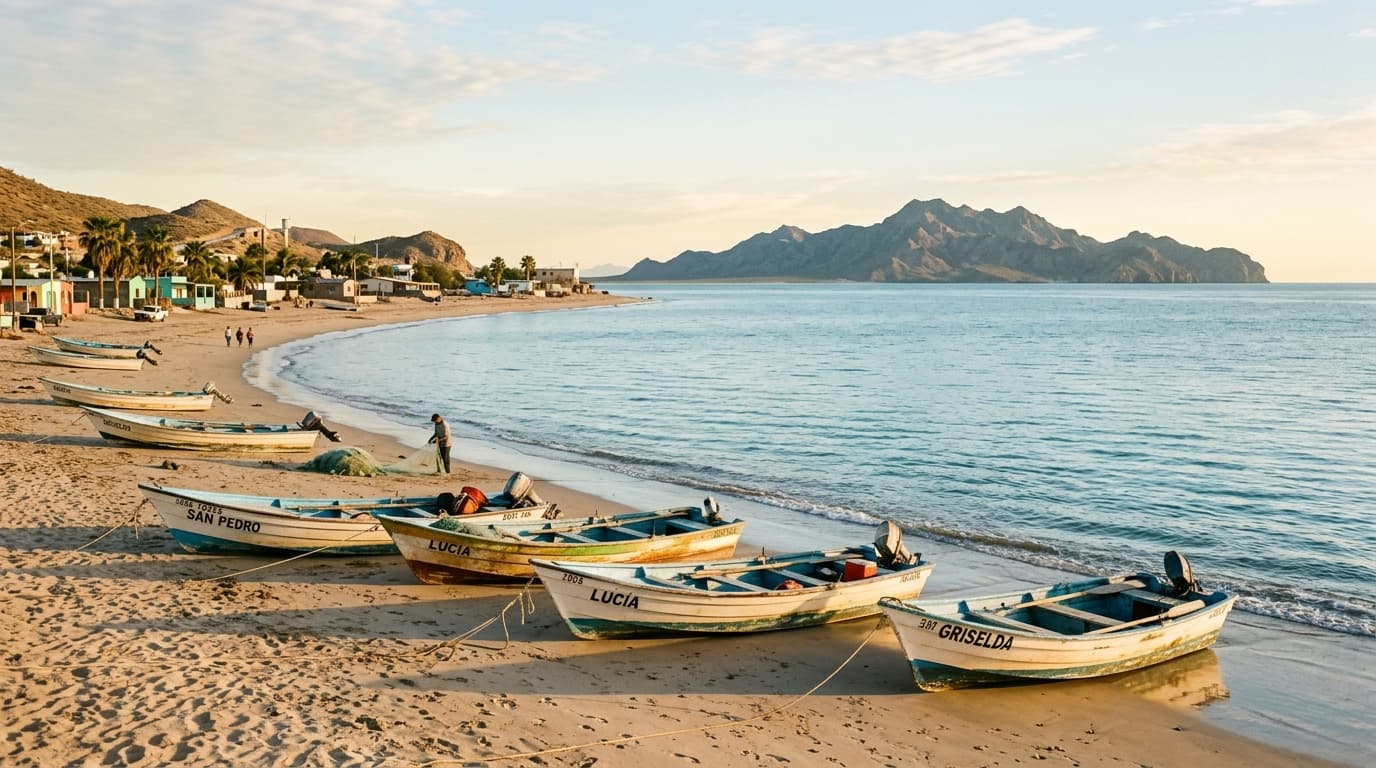
Bahía de Kino — Kino Bay to most of the North Americans who winter there — is what Rocky Point and San Carlos were thirty years ago. About 250 miles and five hours from the Nogales crossing, it sits on the Sea of Cortez west of Hermosillo, looking out at Isla Tiburón, with a small seasonal foreign community and very little development.
It's the quiet option on the Sonoran coast, and it's covered by the cheaper Sonora Only policy, inside the free zone where no vehicle import permit is required. For a snowbird who wants warm water without a crowd, that combination is hard to beat on cost and paperwork alike.
The insurance: Sonora Only is enough
Mexican auto policies are sold by region, and the regional ones cost less because they cover less.
Sonora Only covers the state of Sonora. Kino Bay is in Sonora, about 65 miles west of Hermosillo. So Sonora Only covers it, at meaningfully less than Nationwide.
Baja Only covers the Baja peninsula and nothing on the mainland. It does not cover Kino Bay. The names confuse people constantly — Baja and Sonora face each other across the Sea of Cortez and both get called "the Mexican coast" — but they are separate regions requiring separate policies. A Baja Only holder parked on the beach at Kino Nuevo is legally uninsured.
Nationwide covers everything, at a higher price.
For a Kino Bay season and nothing else, Sonora Only is the right product. Buy Nationwide only if you plan to continue south past the Sonora state line at some point — down to Mazatlán, for instance. Sonora Only stops at that line.
Our Sonora Only vs Baja Only guide covers the regional split in full.
No vehicle import permit
Kino Bay sits within the Sonora free-zone arrangement — the same program that lets Arizona drivers reach Puerto Peñasco without Temporary Vehicle Import Permit paperwork.
That means no TIP, no Banjercito deposit, and nothing to cancel on the way home. It's a genuine simplification over mainland destinations further south, and it removes the single most common paperwork mistake snowbirds make (forfeiting a deposit by not cancelling the permit).
Confirm the current boundary at Banjercito when you cross. The zone's terms are set by Mexican authorities and are subject to change, and the boundary matters if your plans grow mid-season. Our Sonora Hassle-Free Zone guide explains where the zone ends and what happens if you drive past it.
What the free zone does not do is exempt you from insurance. Mexican liability coverage from a Mexican-licensed insurer is required from the moment you cross, everywhere in the country, free zone or not. People conflate the two constantly.
You do still need an FMM tourist permit for a stay of snowbird length. Get it at the crossing.
The route from Nogales
Simple, and one of the shortest drives to any Mexican beach.
Nogales → Hermosillo. About 175 miles, roughly 3 hours on Highway 15D. Four-lane toll highway, straightforward driving.
Hermosillo → Kino Bay. About 65 miles, roughly 1.5 hours west on Highway 16. Two-lane road across flat desert scrub to the coast. It ends at the water.
Total: roughly 250 miles, about 5 hours including the border.
This is a comfortable single day from Nogales, and a long but manageable single day from Tucson or Phoenix. There's no need to break the drive, which is part of the appeal.
Practical notes on the route:
- Fuel in Hermosillo before turning west. Services on Highway 16 toward the coast are thin.
- The Hermosillo bypass is the only complicated navigation of the trip. Have GPS running.
- Standard Mexican highway rule applies: finish before dark. Highway 16 is unlit two-lane with livestock potential.
- Watch for topes entering the small settlements along the way.
Hermosillo is where most Kino Bay residents do their serious shopping and medical appointments, so you'll drive this stretch repeatedly over a season. Our Hermosillo guide covers the city.
Kino Viejo and Kino Nuevo
Kino Bay is two distinct places sharing a name, and knowing which is which matters when you're booking.
Kino Viejo (Old Kino) is the working fishing village — the original town, where the pangas launch, where the fish market is, where most of the Mexican population lives. Dusty, unpolished, functional, and where you'll find the cheapest food and the best seafood. Streets are unpaved in places.
Kino Nuevo (New Kino) is the newer strip running north along the beach. This is where nearly all the North American houses, condos, and RV spots are. A single road runs parallel to the water with development on both sides. Quiet, low-rise, and largely empty in summer.
Most snowbirds base in Kino Nuevo and drive into Viejo for fish, tacos, and hardware.
The practical driving point: Kino Nuevo is a single long strip, so everything is a short drive along one road. Parking is not an issue anywhere in Kino Bay — this is not a colonial town with cobblestone lanes. Most properties have off-street space.
RV parks and long-stay options
Kino Bay has RV parks along the Nuevo strip that have hosted the same returning residents for decades. They're smaller and fewer than Rocky Point's, and the good winter spots go to regulars who book far ahead. If it's your first season, reserve early.
For houses and condos, the market is small. There's no large rental-management infrastructure, and a lot of arrangements happen by word of mouth within the returning community. Book earlier than you would for a bigger destination.
What there is to do
Kino Bay's appeal is that there isn't much, and that's the point.
The beach. Long, flat, and largely empty. The Sea of Cortez here is calm and shallow-shelving compared with San Carlos.
Isla Tiburón. Mexico's largest island sits offshore, visible across the channel. It's a protected area and the traditional territory of the Comcaac (Seri) people; access is controlled and requires arrangement through the community. The view of it dominates the horizon.
Seri (Comcaac) crafts. The Comcaac community has a long-established tradition of ironwood carving and basketry. Buying directly is both the better price and the better ethics.
Sportfishing. Pangas out of Kino Viejo. Less developed than San Carlos's marina scene, more like arranging a boat with a local captain.
Birding. The estuaries and the desert-meets-sea transition make this a legitimately good birding area, which draws a specific and loyal slice of the winter population.
Sunsets. The bay faces west across the water. This is genuinely the main evening activity and nobody pretends otherwise.
What there isn't: nightlife, resorts, chain restaurants, golf, or a marina. If any of those matter, San Carlos or Rocky Point will suit you better.
Coming from Arizona rather than the border
Most Kino Bay traffic originates in Arizona, and the practical planning question is whether it's a one-day trip from home.
Tucson → Kino Bay: roughly 315 miles. Tucson to Nogales is about an hour on I-19, then five hours to the coast. A long but entirely reasonable single day if you leave early.
Phoenix → Kino Bay: roughly 430 miles. Add about two hours to the Tucson figure. Doable in a day, but you'll be leaving before dawn to arrive in daylight — and arriving in daylight matters on the Hermosillo–Kino road.
The alternative: overnight in Hermosillo and do the last 90 minutes fresh in the morning. Hermosillo has a good supply of business hotels with secure parking precisely because it's the corridor's natural stopover.
Note that Kino Bay is a materially different proposition from Rocky Point for an Arizona driver. Rocky Point is 4 to 4.5 hours from Phoenix via Lukeville — a genuine weekend destination. Kino Bay is closer to a full travel day each way, which is why it attracts people staying weeks or months rather than a long weekend.
Border choice: Nogales, not Lukeville. Lukeville feeds the Highway 8 corridor to Rocky Point and doesn't help you reach Hermosillo. Nogales is also a larger crossing with longer operating hours, which matters if your schedule slips.
Kino Bay vs the other Sonora options
Rocky Point (Puerto Peñasco) — closest to Arizona at about 4 to 4.5 hours from Phoenix, busiest, largest development, big spring break and weekend crowds. The high-energy option. See our Rocky Point guide and Phoenix route guide.
San Carlos — about 7 hours from Nogales, marina-centred, sportfishing and diving, established mid-size foreign community, dramatic scenery under Cerro Tetakawi. The boating option. See our San Carlos guide.
Kino Bay — about 5 hours from Nogales, smallest foreign community, least development, quietest. The get-away-from-it-all option.
All three are covered by the same Sonora Only policy, and all three sit inside the free zone, so you can visit all of them in a season on one cheap policy with no vehicle permit. A fair number of Sonora regulars do exactly that.
What a Kino Bay season costs to drive
Rough planning numbers, separate from accommodation:
Getting there and back: fuel for roughly 500 miles round trip from Nogales, plus modest tolls on Highway 15D. One of the cheapest drives to any Mexican beach.
Insurance: Sonora Only annual runs roughly $320-380 for a mid-value vehicle with full coverage — covering the season plus both border runs. Short-term Sonora Only for the same vehicle runs roughly $80-110 a week, $180-250 a month, so anything past about six weeks favours the annual decisively.
Nationwide runs roughly 15-25% more, with annuals in the $400-500 range. Only worth it if you'll leave Sonora.
FMM: a per-person fee at the crossing.
No TIP, no deposit — inside the free zone.
No overnight hotel needed on the drive.
Full coverage rather than liability-only is the sensible default: you'll be driving the Hermosillo road repeatedly, and there's sand, unpaved sections in Viejo, and salt air working on the vehicle all season.
Practicalities for a long stay
Shopping. Kino has small markets and basic groceries. Anything substantial means Hermosillo, 1.5 hours each way. Most residents make a supply run every week or two.
Medical. Kino has basic clinic-level care. Hermosillo has full hospital infrastructure including specialists. Budget the drive into any medical planning, and remember that travel medical insurance is a separate purchase from your auto policy — Mexican car insurance covers the vehicle and your liability, not your health.
Connectivity. Cell coverage is reasonable in Kino Nuevo and patchier outside it. Internet at rentals varies considerably — ask specifically about speed if you need it for work or video calls.
Cash. ATM access is limited compared with larger towns. Bring pesos and plan withdrawals around Hermosillo trips.
Fuel. Available in Kino but with less choice than Hermosillo. Fill up when you're in the city.
The season
- October–November — arrivals begin as summer heat breaks.
- December–March — peak, such as it is. Largest seasonal population, best weather.
- April–May — thinning, warming water, still pleasant.
- June–September — hot, humid, and largely empty of foreign residents. Hurricane season on the Sea of Cortez.
Most seasonal residents arrive in November and leave in March or April.
What Kino Bay snowbirds get wrong
Buying Baja Only. Kino Bay is Sonora, not Baja. The names get conflated and the policy is worthless there.
Assuming the free zone means no insurance needed. The zone exempts the vehicle import permit, not the insurance. Every vehicle in Mexico needs Mexican-licensed liability coverage.
Buying Sonora Only and then driving to Mazatlán. The policy stops at the state line. If there's any chance you'll continue south, buy Nationwide up front.
Expecting infrastructure. There is no supermarket, no hospital, and limited banking. Hermosillo is the answer to most of those, 1.5 hours away.
Booking late. The rental and RV stock is small and much of it goes to returning regulars.
Driving Highway 16 after dark. Two-lane, unlit, livestock.
Buying short-term coverage for a four-month stay. The Sonora Only annual costs less than two months of short-term.
If something happens
Stay at the scene, call the claims number on your policy before moving the vehicle or agreeing to anything, don't admit fault, don't sign Spanish-language documents you can't read.
Kino-specific notes:
- Green Angels (Ángeles Verdes) patrol Highway 15; coverage on Highway 16 toward Kino is thinner.
- Hermosillo is the nearest full-service city for hospitals, mechanical work, and parts.
- Kino Viejo has basic mechanical services adequate for simple problems.
- Cell coverage gaps on the Hermosillo–Kino road mean you shouldn't rely on a phone as your only breakdown plan.
- Keep a printed copy of your policy and your FMM in the vehicle.
Frequently asked questions
Does Sonora Only insurance cover Kino Bay?
Yes. Kino Bay is in the state of Sonora, west of Hermosillo, so a Sonora Only policy covers it and costs less than Nationwide.
Does Baja Only insurance cover Kino Bay?
No. Baja Only covers the Baja California peninsula. Kino Bay is on the mainland in Sonora, so a Baja Only policy leaves you uninsured there.
How far is Kino Bay from the Nogales border?
About 250 miles and roughly 5 hours of driving, south on Highway 15 to Hermosillo and then west on Highway 16 to the coast.
Do I need a TIP to drive to Kino Bay?
Kino Bay sits inside the Sonora free-zone arrangement, so a Temporary Vehicle Import Permit is generally not required. Confirm the current boundary with Banjercito when you cross, since the terms are set by Mexican authorities and can change.
What is the difference between Kino Viejo and Kino Nuevo?
Kino Viejo is the older working fishing village. Kino Nuevo is the newer strip along the beach where most of the North American condos, homes, and RV spots are.
How does Kino Bay compare to Rocky Point and San Carlos?
It is smaller and quieter than both, with a much smaller foreign community and far less development. Rocky Point is the busiest, San Carlos is the boating hub, and Kino Bay is the quiet one.
What is the nearest airport to Kino Bay?
Hermosillo, about 1.5 hours east, is the nearest major airport. Kino Bay itself has only a small airstrip.
What months are peak season in Kino Bay?
November through March, with the largest seasonal population from January through March. Summer is hot and the foreign population largely disappears.
Booking the trip now? Price a Mexican policy.
Related reading
- Sonora Hassle-Free Zone — what it covers and where it ends
- Driving to San Carlos, Sonora
- Driving to Puerto Peñasco / Rocky Point
- Driving to Hermosillo
- Sonora Only vs Baja Only — which policy covers what
- Long-term Mexican car insurance for snowbirds
Written from Rosarito, Baja California.