
Driving to Mexico for the Winter 2026: What You Actually Need to Know

By Scott Tobin · · 11 min read
Last updated:
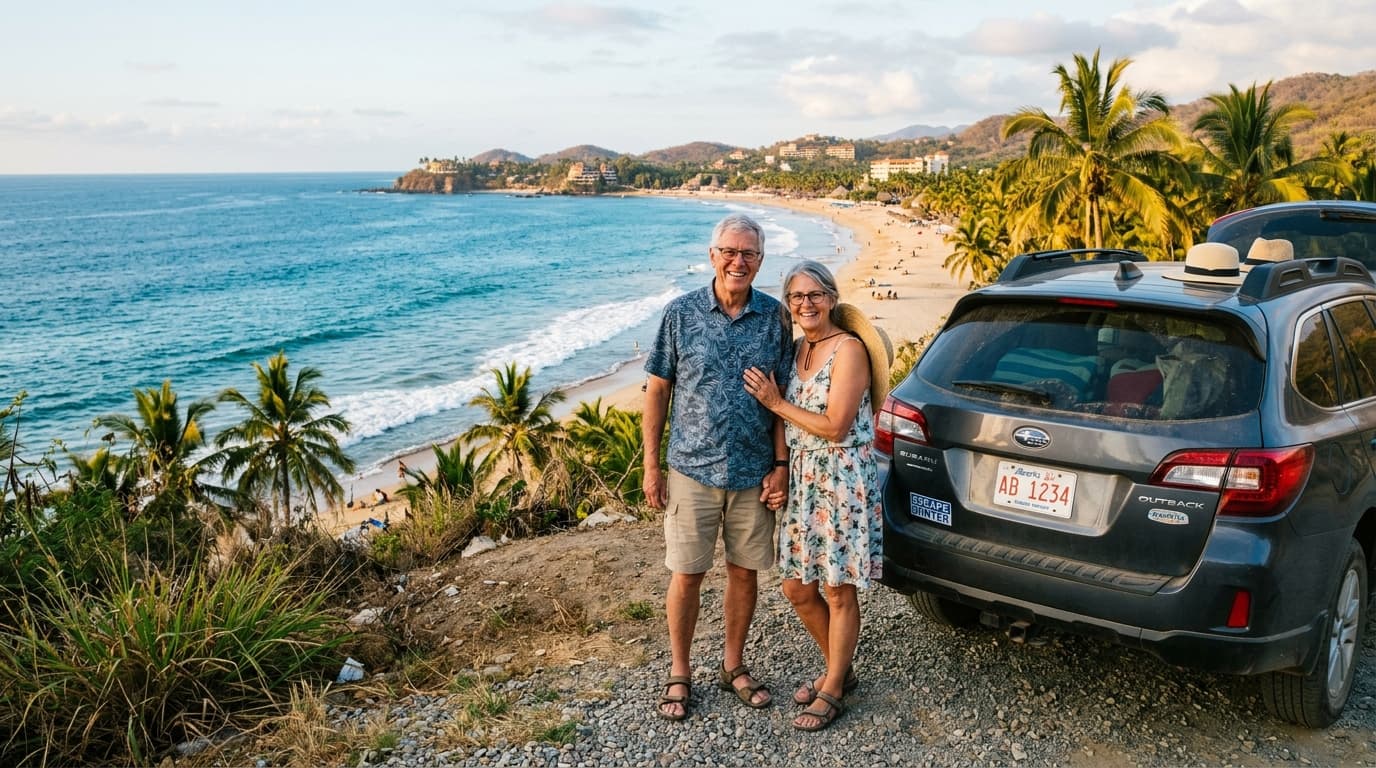
Driving to Mexico for a winter is not a long vacation. It's a small relocation, and the people who enjoy it most are the ones who sorted the paperwork, the vehicle, and the money before they left rather than at the border.
This is the planner's guide — what you need, in what order, and what actually changes depending on where you're going. If you're already decided on a destination, the specific route guides linked throughout will get more granular.
The one decision that drives everything else
Are you going to the Baja peninsula, the Sonora corridor, or the mainland proper?
This single choice determines your paperwork, your insurance region, your route, and how complicated the trip is.
Baja peninsula (Tijuana, Rosarito, Ensenada, Loreto, La Paz, Todos Santos, Cabo) — a free zone. No vehicle import permit required. Simplest option, easiest re-entry to the US, and the reason most west-coast Canadians and Americans default here. Northern Baja is cool and often grey in January; Baja Sur is warm.
Sonora corridor (Puerto Peñasco / Rocky Point, San Carlos) — operates under a free-zone arrangement that also exempts qualifying travel from the vehicle permit. Closest warm-water coast to Arizona. Confirm current terms at Banjercito when you cross.
Mainland Mexico (Mazatlán, Puerto Vallarta, San Miguel de Allende, Lake Chapala, and everywhere else) — full paperwork: vehicle import permit, tourist permit, Nationwide insurance. Longer drive, warmer winters, and the destinations with the biggest established foreign communities.
Everything below flags where the requirements differ.
The documents
Passport
Required. Check the expiry date now, not in October. Many countries and airlines want six months' validity remaining, and while driving across a land border is more forgiving than flying, an expiring passport during a five-month stay is a problem you don't want.
Driver's licence
Your home licence is valid for driving in Mexico as a tourist. You don't need an international permit. Check the expiry — renewing a US or Canadian licence from Mexico is genuinely awkward.
FMM tourist permit
Required for a stay of snowbird length, everywhere in Mexico.
Get it at the border crossing. The permit is issued for a duration determined at the border up to a maximum set by Mexican immigration — confirm the dates you were actually granted before you drive away. Assuming you got the maximum and discovering otherwise in month five is a genuine and avoidable problem.
Keep it with your passport for the whole stay. You surrender it when you leave.
Vehicle registration or title
Bring the original or a certified copy. The name on it matters — if the vehicle is registered to a spouse, a company, or is financed, ask about the documentation requirements well in advance. A lienholder letter is sometimes needed and takes time to obtain.
Temporary Vehicle Import Permit (TIP)
Not needed for Baja. Not needed within the Sonora free-zone corridor. Required for everywhere else on the mainland.
Obtained from Banjercito, either at the crossing or online in advance. You'll need vehicle registration or title, passport, driver's licence, and a credit card in the same name as the registration.
There's a fee plus a refundable deposit scaled to the vehicle's age. The deposit is returned when you cancel the permit on your way out of the country.
The mistake that costs real money: not cancelling the TIP when you leave. You forfeit the deposit and you create problems for future entries — the system remembers that a vehicle entered and never left. Stop at Banjercito on the way north. Every single time.
Mexican car insurance
Required by law, everywhere, without exception.
The insurance requirement, plainly
Mexican federal law requires liability coverage from a Mexican-licensed insurer for every vehicle on Mexican roads. Your US or Canadian policy does not satisfy this, regardless of what your agent at home may have told you.
Some North American insurers sell Mexico extensions. Read them carefully — they are typically supplemental physical-damage coverage that does not meet the Mexican liability requirement on its own.
This is enforced. At an accident scene, police verify insurance before releasing drivers or vehicles, and in Mexico an accident can be treated as a criminal matter until fault is determined. Being uninsured turns a fender bender into a multi-day ordeal.
The three regions
- Baja Only — the peninsula. Roughly $300-350 annually, mid-value vehicle, full coverage.
- Sonora Only — the state of Sonora, including Rocky Point and San Carlos. Roughly $320-380 annually.
- Nationwide — all of Mexico. Roughly $400-500 annually.
Regional policies do not overlap. Baja Only does not cover Rocky Point. Sonora Only does not cover Mazatlán. This is the most common and most expensive Mexican insurance mistake North American drivers make, and it happens because "Baja" and "Mexico" get used loosely.
Buy the region that covers your actual destination. If you're not sure where the season will take you, buy Nationwide.
Annual or short-term?
For a winter stay, annual. The three-month price is typically at or above the annual price, and the annual also covers both border runs and removes the risk of a mid-season lapse.
Full detail in our long-term snowbird insurance guide.
Buy online before you leave home. Booth vendors at the border are legal but typically cost 2-3x online broker pricing with worse coverage terms.
Travel medical insurance — the separate one people skip
Mexican car insurance covers the vehicle and your liability to others. It does not cover your health.
Provincial health plans do not travel. US employer plans typically provide little coverage in Mexico. Medicare provides essentially none outside the United States.
Out-of-country medical insurance is a separate purchase, and for a four-to-six-month stay it's the most important one on the list. Check the maximum trip length on any policy you already hold — many cap at 30 or 60 days and require an extension for a full season.
Border crossings and wait times
Southbound crossings are almost always faster than northbound. The queue you'll remember is the one going home in spring.
The Baja crossings:
- San Ysidro — the busiest land crossing in the Western Hemisphere, right at Tijuana. 24-hour operation.
- Otay Mesa — east of San Ysidro, usually less congested, better for loaded vehicles and trailers.
- Tecate — smallest and calmest of the Baja crossings, adds driving time but often the fastest overall.
- Mexicali East and Mexicali West — for drivers coming through Arizona and the Imperial Valley.
Lukeville (for Rocky Point) — not 24 hours. Roughly 6 AM to midnight. Check current hours before planning a late arrival.
Nogales (for the Pacific mainland corridor) — the standard crossing for Mazatlán, Puerto Vallarta, and Guadalajara-bound traffic, and where most drivers do their TIP and FMM paperwork.
Laredo (for the colonial highlands) — the shortest route to Monterrey, San Luis Potosí, and San Miguel de Allende.
Whichever you use: budget an hour at the border for paperwork even when the vehicle queue is short. The TIP and FMM take time.
Money and banking for a multi-month stay
Tell your bank and card issuers where you'll be and for how long. A card frozen for suspected fraud in week two is a self-inflicted wound.
Understand your fees. Foreign transaction fees on the wrong card add up meaningfully over five months. Some cards charge nothing; some charge 2.5-3% on everything.
ATMs are the normal way to get pesos. Use machines attached to established banks during business hours rather than free-standing machines in tourist areas. Know your daily withdrawal limit — it's often lower abroad.
Carry cash pesos for the drive. Toll booths on the mainland corridors are a real expense and card acceptance is inconsistent. Rural fuel stations often prefer cash.
Expect to need more cash than at home. Many small businesses, markets, and rentals in Mexico are cash-based.
Have a backup card stored separately from your wallet. A lost or eaten card five hours from a city is a much smaller problem with a spare in the room.
The vehicle
You're asking for a long highway drive, months of sitting, and then the same drive back.
- Service it before you leave. Mexican mechanics are capable and inexpensive, but parts for less common North American models can mean waiting days.
- Tires and battery are the two things that fail. Heat kills marginal batteries faster than cold.
- Photograph the vehicle's condition before you cross. Useful for any later claim.
- Trailers are frequently not covered by an auto policy automatically. Get it named explicitly.
- Watercraft is never covered by an auto policy. Separate product entirely.
- Keep documents together and accessible — registration, insurance, passport, FMM, TIP.
Driving in Mexico: the rules everyone repeats
Daylight only. The single most consistent piece of advice from long-time drivers. Livestock on unlit roads, vehicles without lights, and limited shoulders make night driving a materially different risk. Plan every day to finish before sunset.
Toll roads, not free roads. The cuotas cost real money but are faster, better maintained, better patrolled, and pass through fewer towns with speed bumps. The libres save cash and cost time.
Military checkpoints are routine. They're normal, generally courteous, and usually brief. Keep documents accessible, be polite, answer questions.
Topes. Speed bumps, often unmarked, often severe, typically at the entrance and exit of every town. They will damage a vehicle taken at speed.
Green Angels (Ángeles Verdes). Government roadside assistance patrolling federal highways, free of charge. A genuine resource.
Picking a destination
Rough guide for a first winter:
Easiest first season: northern Baja — Rosarito or Ensenada. No vehicle permit, San Diego is a morning away, established foreign community. Accept that January is cool and grey.
Warmest Baja: La Paz, Todos Santos, or the Cabo area. Same simple paperwork, roughly 900-1,000 miles further down the peninsula.
Closest warm water to Arizona: Rocky Point or San Carlos in Sonora. Free-zone paperwork, short drive, Sea of Cortez.
Biggest expat communities: Lake Chapala / Ajijic near Guadalajara, and San Miguel de Allende in the colonial highlands. Both mainland, both require full paperwork, both have the most developed English-language infrastructure in the country.
Beach with a real city attached: Mazatlán or Puerto Vallarta. Mainland, full paperwork, warm all winter.
Destination guides: Mazatlán, Puerto Vallarta, San Miguel de Allende, Lake Chapala and Ajijic, San Carlos, Rosarito, Ensenada, La Paz, Cabo San Lucas, Todos Santos, Loreto, Rocky Point.
Route guides by origin: Alberta, British Columbia, Washington State, Minnesota.
Timing
October — the most common departure month, and the safest for anyone crossing mountains or the northern Plains.
November — still common, particularly from milder origins like coastal BC and Washington where I-5 stays reliable.
December — doable but weather-dependent on any northern route.
March and April — the northbound rush. Expect longer waits at the major crossings, particularly San Ysidro.
If you're driving from Canada or the northern US, build a spare day into the schedule. A fixed arrival date is how people end up driving into a storm.
The home-end checklist
Easy to forget while focused on Mexico:
- Mail — forwarding or digital handling for four to six months.
- The house — heat set appropriately, freeze protection, someone checking on it, snow removal if applicable. Frozen pipes in February while you're on a beach is the most expensive mistake on this page and it has nothing to do with Mexico.
- Bills — automate anything that isn't already.
- Prescriptions — full supply in original labelled packaging with a copy of the prescription.
- Residency day counts — Canadian provinces have minimum-presence rules for health coverage. Know your allowance and track it.
If something happens in Mexico
Stay at the scene. Call the claims number on your policy before you move the vehicle or agree to anything. Don't admit fault. Don't sign a Spanish-language document you can't read.
Keep a printed copy of your policy in the vehicle and the claims number written somewhere other than your phone.
Frequently asked questions
What documents do I need to drive to Mexico for the winter?
A valid passport, your driver's licence, your vehicle registration or title, an FMM tourist permit, Mexican car insurance from a Mexican-licensed insurer, and a Temporary Vehicle Import Permit if you are going anywhere on the mainland outside the free zones.
Do I need a TIP to drive in Mexico?
It depends where you go. The Baja peninsula and the Sonora free-zone corridor do not require one. Everywhere else on the mainland does, obtained from Banjercito.
Is Mexican car insurance legally required?
Yes. Mexican federal law requires liability coverage from a Mexican-licensed insurer for every vehicle on Mexican roads. US and Canadian policies do not satisfy this.
How long can I stay in Mexico on a tourist permit?
The FMM is issued for a period determined at the border, up to a maximum set by Mexican immigration. Confirm the dates you were actually granted before leaving the crossing rather than assuming you received the maximum.
How early should I leave for a winter in Mexico?
October is the most common departure month. Drivers coming from Canada and the northern US generally leave in early to mid October to stay ahead of mountain and Plains winter weather.
How much cash should I bring?
Enough pesos for tolls and fuel on the drive, since card acceptance at toll booths and rural stations is inconsistent. For the stay itself, ATMs at established banks are the normal way to get pesos.
Do I need travel medical insurance as well as car insurance?
Yes. They are entirely separate products. Mexican car insurance covers the vehicle and liability. Provincial and US health plans generally do not travel, and Medicare provides essentially no coverage outside the US.
Which winter destination should I choose as a first-timer?
Northern Baja is the easiest first season because it requires no vehicle import permit and you can return to the US border in a morning. Mainland destinations are warmer in mid-winter but involve more paperwork and a longer drive.
Wondering what yours would cost? Get covered before you go.
Related reading
- Mexican auto insurance — coverage, limits, and how it works
- Long-term Mexican car insurance for snowbirds
- Do I need Mexican car insurance to drive to Mexico?
- How much does Mexican car insurance cost in 2026?
- Sonora Only vs Baja Only — which policy covers what
- Essential tips for a smooth border crossing
Written from Rosarito, Baja California.
How to Prepare for a Winter Drive to Mexico
- 1Decide your destination region first — Baja peninsula, the Sonora free zone, or mainland Mexico. It determines your paperwork, your insurance region, and your route.
- 2Buy Mexican liability insurance from a Mexican-licensed insurer in the region that covers your destination. Your US or Canadian policy is not valid in Mexico.
- 3Get an FMM tourist permit at the border crossing, and confirm the dates you were actually granted before you drive away.
- 4Get a Temporary Vehicle Import Permit from Banjercito if you are going anywhere on the mainland outside the free zones, and plan to cancel it on the way home.
- 5Service the vehicle, check tyres and battery, and photograph its condition before you cross.
- 6Plan the route in daylight-length days, use the toll roads rather than the free roads, and book overnight stops with secure parking.
- 7Sort the home end before you leave — mail, bills, freeze protection, prescriptions, and any residency day counts.