
Snowbird Driving From Minnesota to Mexico 2026: Two Routes, and the Insurance You Need

By Scott Tobin · · 11 min read
Last updated:
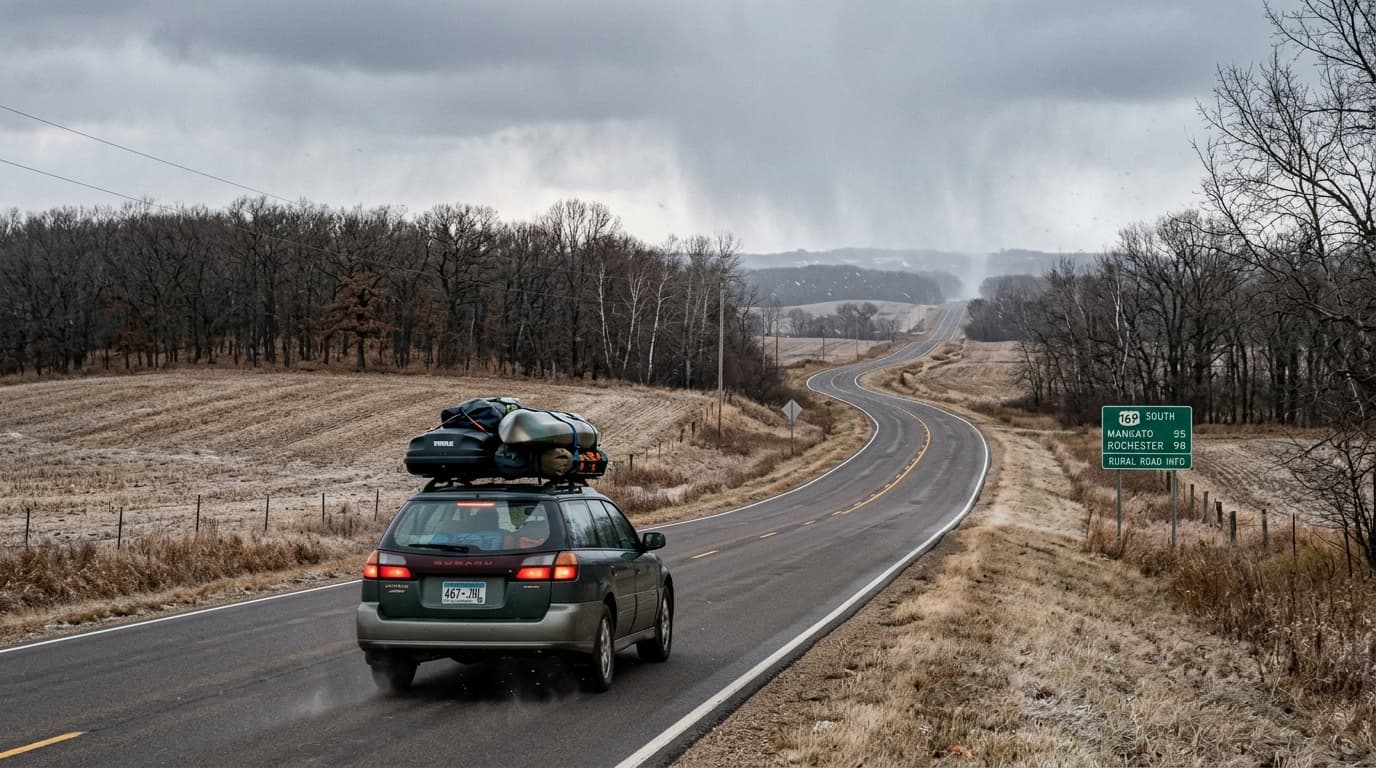
Minnesota sends a lot of people south for the winter, and the ones who drive face a question that coastal snowbirds don't: which way?
From Minneapolis you're roughly equidistant from two very different border crossings. Head south through Iowa, Missouri, Oklahoma, and Texas to Laredo, and you're positioned for Monterrey and the colonial highlands. Head southwest through Nebraska, Colorado or Kansas, New Mexico, and Arizona to Nogales, and you're positioned for the Pacific coast.
Both are roughly 1,700 miles and about three days. The insurance answer is the same either way: every destination Minnesota snowbirds actually drive to is on the mainland, so you need Nationwide coverage, plus a TIP and an FMM.
Why it's Nationwide, regardless of route
Mexican auto policies are regional, and the cheap regional ones are built around the border free zones.
Baja Only covers the Baja peninsula. Minnesota snowbirds essentially never end up there by car — it's the wrong side of the country and the drive is longer than the Pacific mainland route to a comparable climate.
Sonora Only covers the state of Sonora. If you take the Nogales route, you'll drive through Sonora on day one. But Mazatlán is in Sinaloa and Puerto Vallarta is in Jalisco, so Sonora Only stops covering you hundreds of miles before you arrive.
Nationwide covers every Mexican state. It's roughly $400-500 annually for a mid-value vehicle with full coverage, and it's the correct product for every mainland destination.
Your Minnesota policy is not valid in Mexico. US insurers sometimes offer Mexico add-ons; read them carefully, because they are typically supplemental physical-damage coverage that does not satisfy the Mexican liability requirement on its own.
Route A: south to Texas, cross at Laredo
The route for the colonial interior.
Minneapolis → Kansas City / Wichita. Down I-35 through Iowa and Missouri. Long, flat, efficient.
Kansas City → Dallas / Fort Worth. Continuing I-35 through Oklahoma.
Dallas → San Antonio → Laredo. I-35 all the way to the border.
Total: roughly 1,300 miles to Laredo depending on routing — I-35 runs almost door to door, which is one of this route's real advantages.
Then into Mexico:
- Laredo → Monterrey, about 150 miles, roughly 2.5 hours.
- Monterrey → San Luis Potosí, about 320 miles, roughly 4.5 hours.
- San Luis Potosí → San Miguel de Allende, about 120 miles, roughly 2 hours.
That's about 700 miles and 11 hours from Laredo to San Miguel — the shortest border-to-destination leg of any mainland snowbird route.
Continue past San Miguel and you can reach Guadalajara and Lake Chapala, or carry on to the Pacific coast the long way.
Why take it: it's the fast route to San Miguel de Allende, Querétaro, and the colonial highlands, and I-35 is about as simple as a 1,300-mile US drive gets.
Our San Miguel de Allende guide covers that destination and the Laredo approach in detail. Our Texas drivers guide covers the crossing options.
Route B: southwest to Arizona, cross at Nogales
The route for the Pacific coast.
Minneapolis → Omaha / Denver or Wichita. Southwest across the Plains. Routing varies — some drivers go via I-80 and Denver, others cut southwest through Kansas and Oklahoma.
Denver / Albuquerque → Tucson. Down through New Mexico into Arizona.
Tucson → Nogales. About 65 miles south on I-19.
Total: roughly 1,700 miles to Nogales.
Then into Mexico:
- Nogales → Mazatlán, about 900 miles, roughly 14 hours on Highway 15/15D.
- Mazatlán → Puerto Vallarta, about 300 miles, roughly 5 hours further.
- Or Mazatlán → Guadalajara → Lake Chapala, about 350 miles, roughly 6 hours.
Why take it: it's the natural route to Mazatlán, Puerto Vallarta, and the Pacific beaches, and it puts you through warm country sooner — a real consideration leaving Minnesota in November.
Destination guides: Mazatlán, Puerto Vallarta, Lake Chapala and Ajijic.
Which route to pick
Simplest framing:
- Beach? Arizona / Nogales.
- Colonial highlands? Texas / Laredo.
- Lake Chapala? Either works. Nogales via Guadalajara, or Laredo via San Luis Potosí and Guadalajara.
Weather is the other input. The Plains route southwest can involve genuine winter driving in late season — Nebraska, Colorado, and the high plains get real storms. I-35 south through Iowa and Missouri is lower elevation and typically clears faster. If you're leaving in December rather than October, the Texas route is generally the safer bet.
The paperwork — new territory for most Minnesota drivers
Unlike Baja-bound snowbirds from the west coast, you're going to mainland Mexico, which means the full paperwork set.
TIP (Temporary Vehicle Import Permit)
Required for every mainland destination. Obtain from Banjercito at the crossing or online in advance.
Bring vehicle registration or title, passport, driver's licence, and a credit card in the same name as the registration. Expect a fee plus a refundable deposit scaled to the vehicle's age.
Cancel the TIP when you leave Mexico. Not cancelling forfeits the deposit and creates problems for future entries. Stop at Banjercito on the way north. This is the most common first-year mistake among mainland snowbirds and it's entirely avoidable.
FMM tourist permit
Required for a stay of snowbird length. Get it at the crossing with the TIP. Confirm the dates granted before you drive away, and keep it with your passport — you need it to exit.
Costs and why the annual wins
Mid-value vehicle ($20,000-$40,000), full coverage, Nationwide:
- 1 week: $95-135
- 2 weeks: $175-240
- 1 month: $200-280
- 3 months: $340-450
- Annual: $400-500
Minnesota snowbirds stay long — the drive is far enough that a two-week trip doesn't justify it. Three to six months is the norm.
At three months you're already close to the annual price. At four or more it isn't a question. The annual also covers the drive home and next season's first crossing, which short-term buyers routinely forget to factor in.
Full coverage rather than liability-only makes sense here given the mileage: 3,400 to 4,000 miles round trip in the US plus another 1,400 to 2,400 in Mexico, on roads you don't know.
Our long-term snowbird insurance guide works through annual structures, renewal terms, and mid-policy cancellation.
Timing
Minnesota snowbirds tend to leave earlier than coastal ones, for the obvious reason.
October — the most common window. Ahead of Plains winter weather, and the Mexican rainy season has ended on both coasts.
Early November — still common. Many people leave right after the first hard freeze.
December — doable, but the Plains and mountain west routes get genuinely risky. Favour the Texas route if you're going late.
Northbound in March or April — straightforward on either route.
Build a spare day into any late-season schedule. Fixed arrival dates lead to bad decisions about driving into weather.
Where Minnesota drivers actually stop
Route A (I-35 to Laredo) — three nights in the US, one or two in Mexico:
- Night one: Kansas City or Wichita. Straight down I-35.
- Night two: Oklahoma City or Dallas. By now the weather risk is behind you.
- Night three: San Antonio or Laredo. Staying in Laredo means crossing first thing, which is the right way to handle the paperwork day.
- In Mexico: Monterrey or Matehuala, then San Miguel the following afternoon.
Route B (southwest to Nogales) — three nights in the US, one or two in Mexico:
- Night one: Omaha, Lincoln, or Kansas City depending on your routing.
- Night two: Denver, Amarillo, or Albuquerque. This is the day with elevation and the most winter weather exposure.
- Night three: Tucson. An hour from the border, which sets up a morning crossing.
- In Mexico: Guaymas, San Carlos, or Los Mochis, then Mazatlán the next day. Puerto Vallarta needs one more.
Cross in the morning, always. Paperwork takes time, and you want daylight for the first Mexican driving day.
What a season costs to drive
Rough planning numbers, separate from accommodation:
Fuel for 3,400-4,000 miles of US interstate round trip, plus 1,400-2,800 miles in Mexico depending on destination.
US hotels: three nights each direction on either route.
Mexican tolls: a genuine expense on both corridors — Highway 15D down the Pacific and 57D through the interior are toll roads for most of their length. Carry cash pesos; card acceptance at booths is inconsistent.
Insurance: $400-500 for the Nationwide annual, covering the season and both drives.
TIP: fee plus a refundable deposit, returned when you cancel on exit.
FMM: per-person fee at the crossing.
Travel medical: separate, priced by age and trip length, and often the largest insurance cost of the trip for a multi-month stay.
The comparison worth running: for a three-week trip, flying and renting is cheaper. For a four-month season, driving your own vehicle down is substantially less than a four-month rental, and you have your own car the whole time. Most Minnesota snowbirds who drive are staying long enough that it isn't close.
Vehicle prep for a long haul
You're asking a lot of the vehicle: roughly 3,000-4,000 miles of US interstate, then 700-1,400 miles of Mexican highway, then months parked, then the same in reverse.
- Full service before departure. Don't plan to sort it in Mexico — parts for less common models can mean waiting.
- Tires and battery are the two things that fail. A battery that starts fine in a Minnesota October may not cope with a Sinaloa February.
- Check the block heater cord isn't dangling. Genuinely — it's a Minnesota-specific detail that gets forgotten and it will not survive the trip.
- Carry registration, proof of Mexican insurance, passport, FMM, and TIP together and accessible.
- Photograph the vehicle before crossing.
Driving in Mexico — the two rules
Daylight only. On Highway 15 down the Pacific corridor and on Highway 57D through the interior alike, the standing advice from everyone who drives these roads regularly is to be off the highway before dark. Livestock, unlit vehicles, and limited shoulders make night driving a materially different risk.
Toll roads, not free roads. The cuotas cost real money — budget for it in cash pesos — and they are faster, better maintained, better patrolled, and pass through fewer towns. The libres save money and cost time and comfort.
Military and state checkpoints are routine on both routes. They're normal and usually brief. Keep documents accessible and be polite.
The rest of the checklist
Travel medical insurance. Your US plan almost certainly provides little coverage in Mexico, and Medicare provides essentially none outside the US. This is a separate purchase from auto insurance and it's the one people skip most often.
Prescriptions. Full supply, original labelled packaging, copy of the prescription.
The house. Leaving a Minnesota house empty for four months in winter is its own project — heat set appropriately, water considerations, someone checking on it, snow removal arranged. Frozen pipes while you're in Mazatlán is a genuinely bad outcome.
Banking and mail. Notify the bank, arrange mail handling.
What Minnesota snowbirds get wrong
Buying Sonora Only because the route goes through Sonora. The policy has to cover the destination, not just the transit. Mazatlán is Sinaloa; Puerto Vallarta is Jalisco.
Skipping the TIP. Mainland Mexico requires it. No TIP puts the vehicle at risk.
Not cancelling the TIP northbound. Forfeited deposit and future complications.
Leaving too late on the Plains route. December through Nebraska and Colorado is a different trip from October.
Buying three months of coverage for a five-month stay. Run the annual number first.
Skipping travel medical insurance. Entirely separate from auto coverage.
Buying insurance at the border booth. 2-3x online pricing with worse terms.
Not winterising the house properly. The most expensive mistake on this list, and it has nothing to do with Mexico.
If something happens
Stay at the scene, call the claims number on your policy before moving the vehicle or agreeing to anything, don't admit fault, don't sign Spanish-language documents you can't read.
- Green Angels (Ángeles Verdes) patrol the federal toll highways on both routes and provide free roadside assistance.
- The Monterrey ring roads (Texas route) and the Guadalajara periférico (Arizona route) are the most demanding driving on each. Have navigation running.
- Mazatlán, Puerto Vallarta, Guadalajara, and Querétaro all have full hospital infrastructure accustomed to foreign patients.
- Keep printed copies of the policy, TIP, and FMM in the vehicle.
Frequently asked questions
What Mexican insurance do Minnesota snowbirds need?
Nationwide coverage. Every destination Minnesota snowbirds typically drive to — Mazatlán, Puerto Vallarta, San Miguel de Allende, Lake Chapala — is on the mainland, which regional Baja Only and Sonora Only policies do not cover.
Which route is better from Minnesota, Texas or Arizona?
Texas via Laredo is shorter for the colonial highlands and San Miguel de Allende. Arizona via Nogales is the natural route for the Pacific coast destinations like Mazatlán and Puerto Vallarta.
How far is Minneapolis to the Mexican border?
About 1,700 miles to Nogales, Arizona. Laredo, Texas is roughly comparable depending on the exact routing, and both are typically three days of driving.
Do Minnesota snowbirds need a TIP?
Yes, for any mainland destination. A Temporary Vehicle Import Permit from Banjercito is required, and it must be cancelled when you leave Mexico or you forfeit the deposit.
When should Minnesota snowbirds leave?
October and early November are typical, ahead of serious winter weather across the Plains and the mountain west. Many leave right after the first hard freeze.
Is an annual policy worth it from Minnesota?
Yes for most. Minnesota snowbirds tend to stay three to six months given the distance, and a Nationwide annual at roughly $400-500 costs less than that many months of short-term coverage.
Does my Minnesota auto insurance cover me in Mexico?
No. US policies are not recognised in Mexico. Mexican law requires liability coverage from a Mexican-licensed insurer as a separate purchase.
Which Mexican destinations are most popular with Minnesota snowbirds?
Mazatlán and Puerto Vallarta on the Pacific coast, and San Miguel de Allende and Lake Chapala in the interior highlands.
One thing left to book? Get a quote before you cross.
Related reading
- Driving to Mazatlán for the winter
- Driving to Puerto Vallarta for the winter
- Driving to San Miguel de Allende
- Driving to Lake Chapala and Ajijic
- Mexican auto insurance for Illinois and Wisconsin drivers
- Long-term Mexican car insurance for snowbirds
Written from Rosarito, Baja California.