

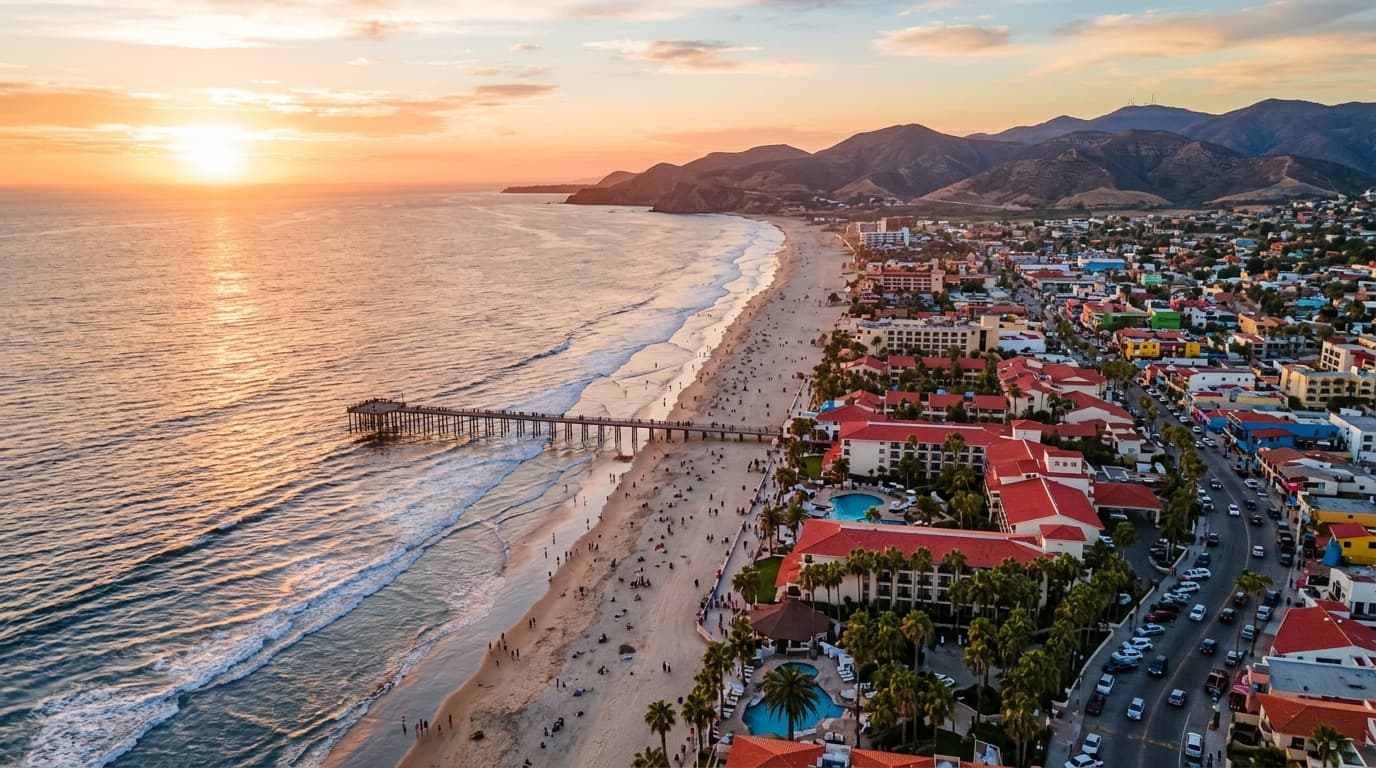
Rosarito is one of the easiest weekend trips from Southern California. Twenty-two miles from the San Ysidro border crossing, direct scenic toll road the whole way, and you're on the beach in under an hour of leaving San Diego traffic behind. Which is exactly why so many Americans skip the one thing they legally have to do first: get Mexican car insurance.
I live in Rosarito. I watch the same pattern every summer. Someone crosses at San Ysidro on Friday afternoon with no Mexican policy, hits a fender bender in the parking lot at Rosarito Beach Hotel on Saturday, and spends Sunday sorting out impound fees instead of driving home. Here's how to not be that person.
What Mexican law requires for the Rosarito drive
Mexican federal law requires liability insurance from a Mexican-licensed insurer for every vehicle on Mexican roads. Your US or Canadian policy is not recognized. This applies to a 2-hour lunch trip to Rosarito exactly like it applies to a 2-week road trip to Cabo.
The minimum legal requirement is liability coverage for damages to third parties. Most people driving to Rosarito buy at least liability + collision, because if something happens to your own vehicle south of the border with liability-only coverage, you're on the hook for the repair or replacement.
The best border crossing for Rosarito
Two options, both work.
San Ysidro (I-5 South). Closest to Rosarito — 22 miles from the crossing. Straightforward once you know the lanes. Coming into Mexico is usually fast in the morning; getting back to the US is where you can lose 3+ hours on weekend afternoons.
Otay Mesa (SR-905). About 10 minutes longer to Rosarito, but usually 30-60 minutes faster going northbound if you don't have SENTRI. Southbound is generally similar on CBP's border wait times site to San Ysidro. If you're heading home Sunday afternoon, Otay Mesa is worth the extra distance.
If you have SENTRI or Global Entry with SENTRI privileges, use Otay Mesa southbound. Otay Mesa's SENTRI lanes are averaging under 15 minutes even on Labor Day peak weekends.
For more on the Rosarito-adjacent crossings, see Crossing at San Ysidro and Crossing at Otay Mesa.
The drive from the border to Rosarito
After crossing at San Ysidro, follow signs for "Playas / Rosarito / Ensenada" and take the scenic toll road (Mexican Federal Highway 1D). It's a 4-lane divided highway that runs right along the Pacific Coast, and it's genuinely one of the prettiest short drives in North America.
Check current toll amounts and bring small bills.
Rosarito exit is well marked. From the last toll booth to Rosarito Beach is about 6 minutes.
What to have with you before you cross
Everyone in the vehicle needs a valid passport. For the drive back, CBP accepts a US passport, passport card, enhanced driver's licence or trusted traveler card for land re-entry under the Western Hemisphere Travel Initiative; a regular state licence is not enough. The passport card, enhanced driver's licence and trusted traveler cards are also the documents CBP's Ready Lanes take, and the passport book is not (CBP Ready Lanes). Check the current Mexican passport-validity rules before you travel.
The driver needs a US or Canadian driver's license, vehicle registration in your name, and printed proof of Mexican auto insurance. If the vehicle isn't in your name, you need a notarized letter from the owner giving you permission to drive it into Mexico. See what you need before you drive into Mexico for the paperwork.
Check the current FMM visitor permit rules for your stay (INM), and see what you need before you drive into Mexico for whether a temporary vehicle import permit applies to your trip. You don't need a temporary vehicle import permit (TIP) for Baja California — TIP is only required for mainland Mexico.
Real prices for a Rosarito trip
Baja Bound quoted these totals on 4 October 2026 for a $30,000 vehicle with full coverage in Baja and Sonora:
- Day trip (1 day): $33.51–$41.64
- Weekend (2 days): $52.02–$65.97
- 3 days: $70.53–$91.47
- 1 week: $144.57–$193.42
- 30 days: $514.77–$703.18
- Annual (Baja Saver): $424.31–$530.70
If you cross regularly for lunch or weekend trips, compare the annual figure with the cost of repeated short-term policies. See the full price table. For the crossing and the policy options for Rosarito trips, see our Rosarito page.
Common Rosarito trip scenarios
Day trip for lobster in Puerto Nuevo. A 1-day full coverage policy. You'll be back across the border by evening. This is the classic Rosarito day trip.
Weekend at Rosarito Beach Hotel. A 3-day full coverage policy covers you Friday morning through Sunday night.
Long weekend Labor Day trip. A 4-day full coverage policy. Cross Friday, come home Monday morning to beat the Sunday afternoon northbound line.
Bachelor/bachelorette weekend. 3-4 day full coverage. Check the policy's driver terms if someone else in your group might drive: Baja Bound's FAQ says other drivers are covered as long as they have a valid driver's license on their person, and you do not need to list them (Baja Bound FAQ).
Bringing friends who don't have a Mexican policy on their own vehicles. Each vehicle needs its own policy. Baja Bound quotes each vehicle separately in about 5 minutes.
What Rosarito visitors get wrong
"It's just for a couple hours, I'll skip it." Without a policy, the damage you cause in even a parking-lot fender bender is yours to pay, in a foreign country, and driving on federal roads without third-party insurance carries a fine (art. 74 Bis). A short-term policy is not the corner to cut.
"The border booth insurance is fine." Buying at a booth puts you in a stressful reading-fine-print-at-midnight situation. Buy online before you leave.
"My credit card covers this." Almost universally false for private vehicles you own. Some cards cover rental cars in Mexico. Almost none cover your own vehicle. Read your card's benefit terms before relying on them. A card benefit is not a Mexican liability policy, and US and Canadian insurance is not considered proof of financial responsibility under Mexican law (Baja Bound FAQ).
"AAA works in Mexico." AAA memberships include some Mexican coverage terms, but AAA-issued Mexican auto insurance is generally more expensive than Baja Bound or Mexpro direct pricing, and roadside coverage inside Mexico varies by contract with local partners.
"I only need liability." Legal minimum, but Rosarito's parking lots and beach access roads are where the majority of small collisions happen. If your own vehicle gets damaged with liability-only coverage, you pay out of pocket for repairs in Mexico or a tow back to the US.
What to do if there's a problem
If you're in any accident, however minor, do not leave the scene. Call the Baja Bound claim number on your policy immediately. Do not admit fault, do not sign anything in Spanish you can't read, do not accept cash from the other driver. Baja Bound's FAQ says claims must be filed in Mexico before returning to the US (Baja Bound FAQ).
For a fender bender with a Mexican policy in hand, expect 30-60 minutes for a claims adjuster to arrive at the scene. They'll photograph everything, take statements, and give you paperwork to continue your trip.
For anything more serious (injuries, major damage, disputed liability), Baja Bound's auto policies include legal assistance and a bail bond (Baja Bound auto page).
The one-line summary for Rosarito trips
Buy the right length Baja & Sonora policy from Baja Bound before you leave, print it, cross at San Ysidro southbound (Otay Mesa if you have SENTRI), take the toll road, consider coming home Monday morning to avoid the Sunday northbound line.
Do that and Rosarito is one of the easiest weekend trips in North America.
Driving down for the whole winter?
A large share of the people who spend a season in Rosarito drive rather than fly, and most of them come from the Pacific Northwest or the Canadian Prairies. If that's your trip, the route matters as much as the destination — our origin guides cover departure timing, mountain-pass weather, where to break the drive, and why an annual policy may suit a long stay: Alberta to Baja, British Columbia to Baja, and Washington State to Baja.
For the wider planning picture — documents, permits, border waits, and money for a multi-month stay — start with our guide to driving to Mexico for the winter.
Once you are there
Two things worth reading before your first trip down. Rosarito's craft markets run on haggling, and the dos and don'ts of bartering in Mexico covers where to open, when to walk away, and what you should never bargain over. Driving in town has its own conventions too — stop sign etiquette in Mexico covers what to do at an ALTO sign.
For the road between the border and the coast, see Tijuana's new viaduct.
Planning the crossing? Get a quote before you cross.